
Making pasta by hand is deeply satisfying. A deliberate choice to slow down, working flour and water until they become something else entirely. There is something almost meditative about taking the humblest of pantry staples and turning it into a living canvas, ready to welcome whatever it meets.
And while autumn usually turns our eyes toward the land, to harvested pumpkins, crisp apples, and warming spices, there is a deep instinct within us, rooted in memory, that turns our hearts back toward the sea.
Wandering through the autumn market, you see the clams piled on ice at the fish stall, glistening and plump. The colder months are when vongole truly come into their own. For us, this dish carries a vivid piece of Fabio’s family history
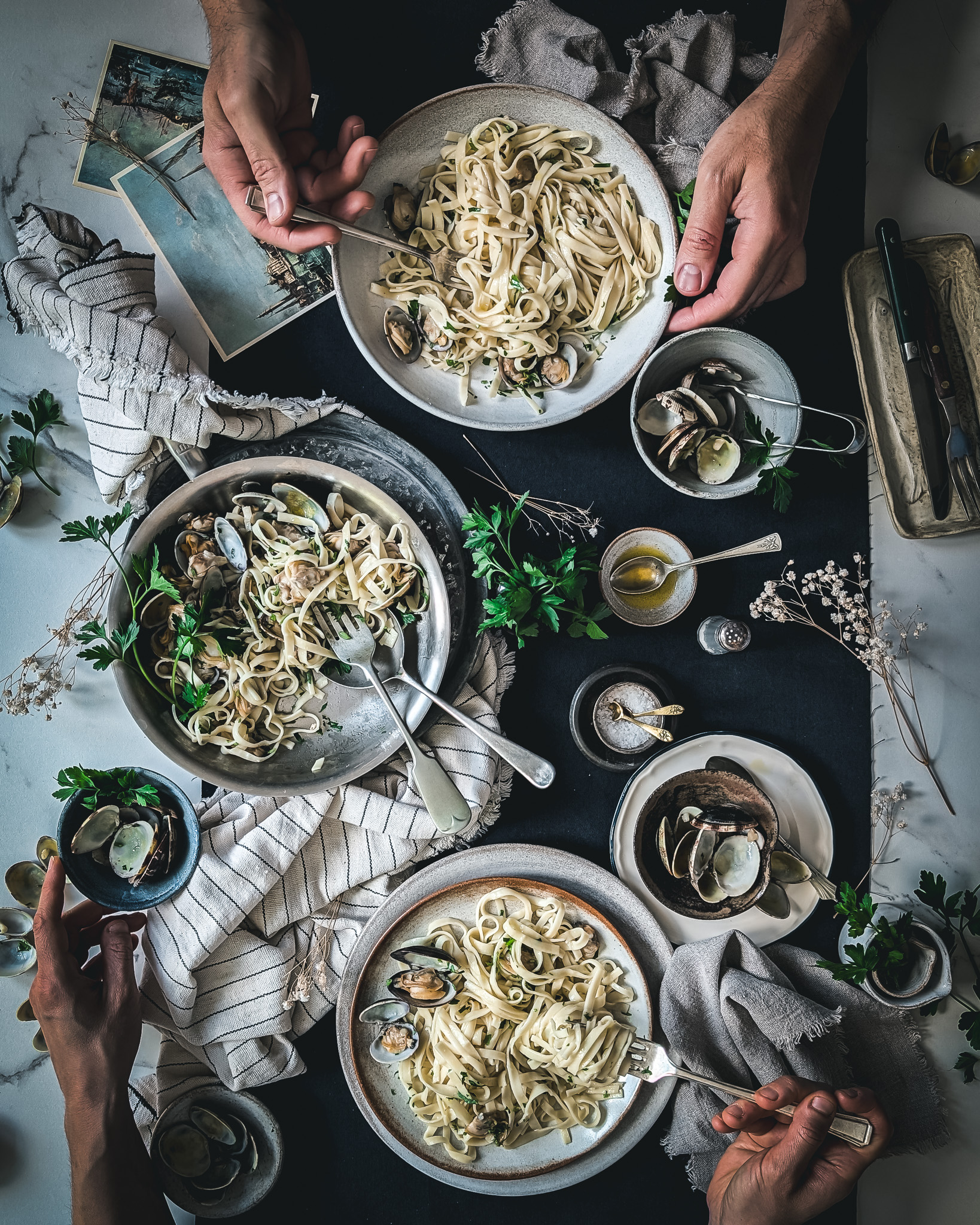
His grandparents lived in the Ghetto in Venice and were not a wealthy family. His grandfather worked as many jobs as he could to support his family and bring food home for his two children, Fabio’s mum, Ivana, and her brother. But he also knew the Venetian lagoon intimately, and whenever he could, he would go out on the water.
The lagoon was abundant then. He would return home with so much fish that the same catch would appear on the table for several days, cooked in different ways by Fabio’s grandmother. What he couldn’t use at home, he would sell near the little bridge down the calle, laying out the surplus and trying to make a living from whatever the lagoon had given that day. Ivana still remembers eating fried oysters multiple times a week, not as a luxury, but simply as what the lagoon had generously given them.
And among the catch, there were always vongole.
Back in the kitchen, a big pan of clams cooked simply with garlic, good olive oil, and fresh parsley, opening up to release all their salty, sea-rich juices, was a regular family meal. Add some pasta, and you had dinner. Nothing extra, nothing hidden.
That pure simplicity is what we still love about pasta alle vongole today.
With a sauce this clean, taking the time to make the pasta yourself feels even more right. Just semolina flour, water, time, and your hands. Mixing, kneading, rolling, and cutting the dough into fresh linguine. It takes a little more time than opening a packet of dried spaghetti, but watching those soft strands take shape gives the dish a peaceful pause.
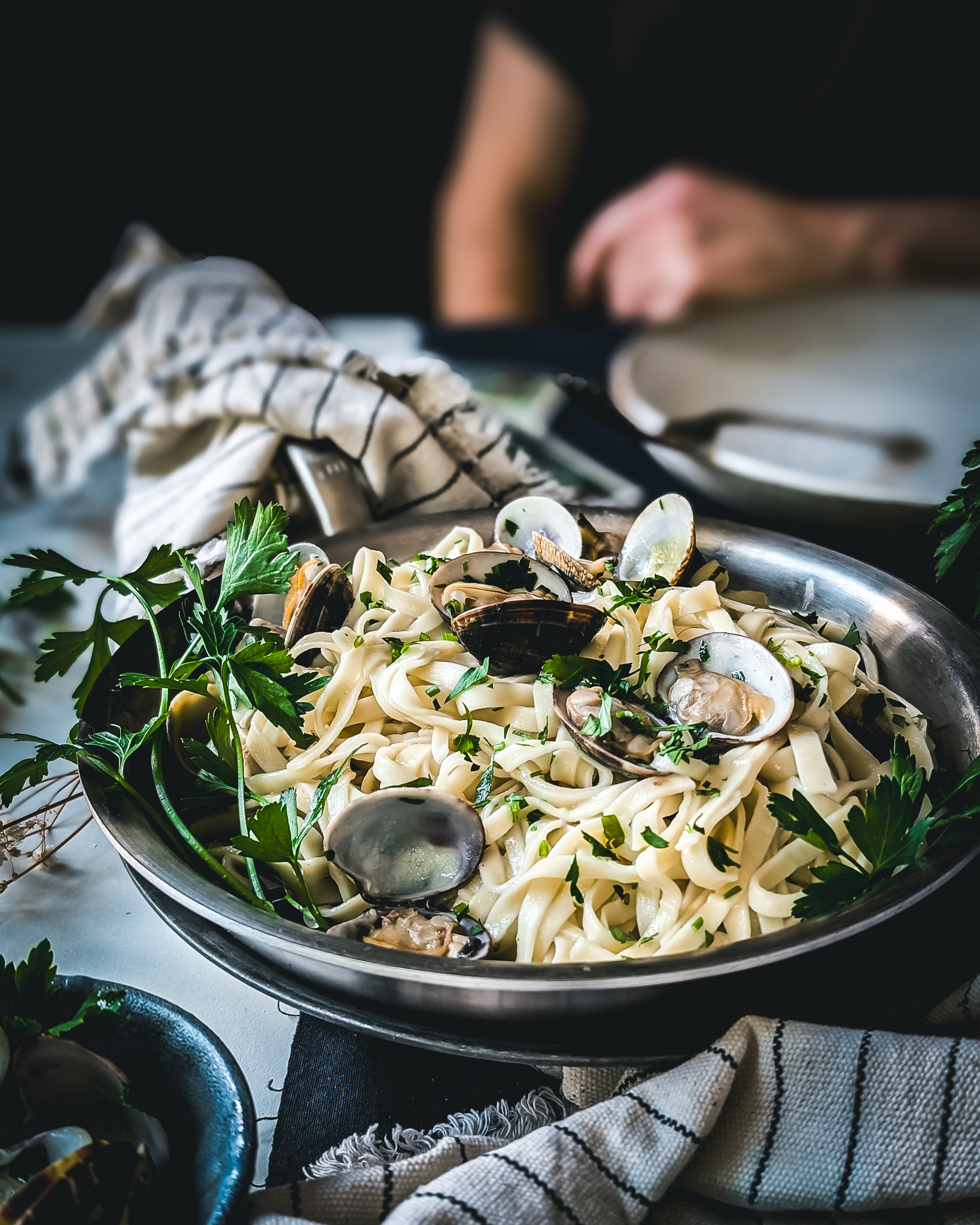
The soft, fresh linguine catches every drop of garlic-infused oil and the taste of the sea, bringing everything together in every single mouthful.
And perhaps that is the real point.
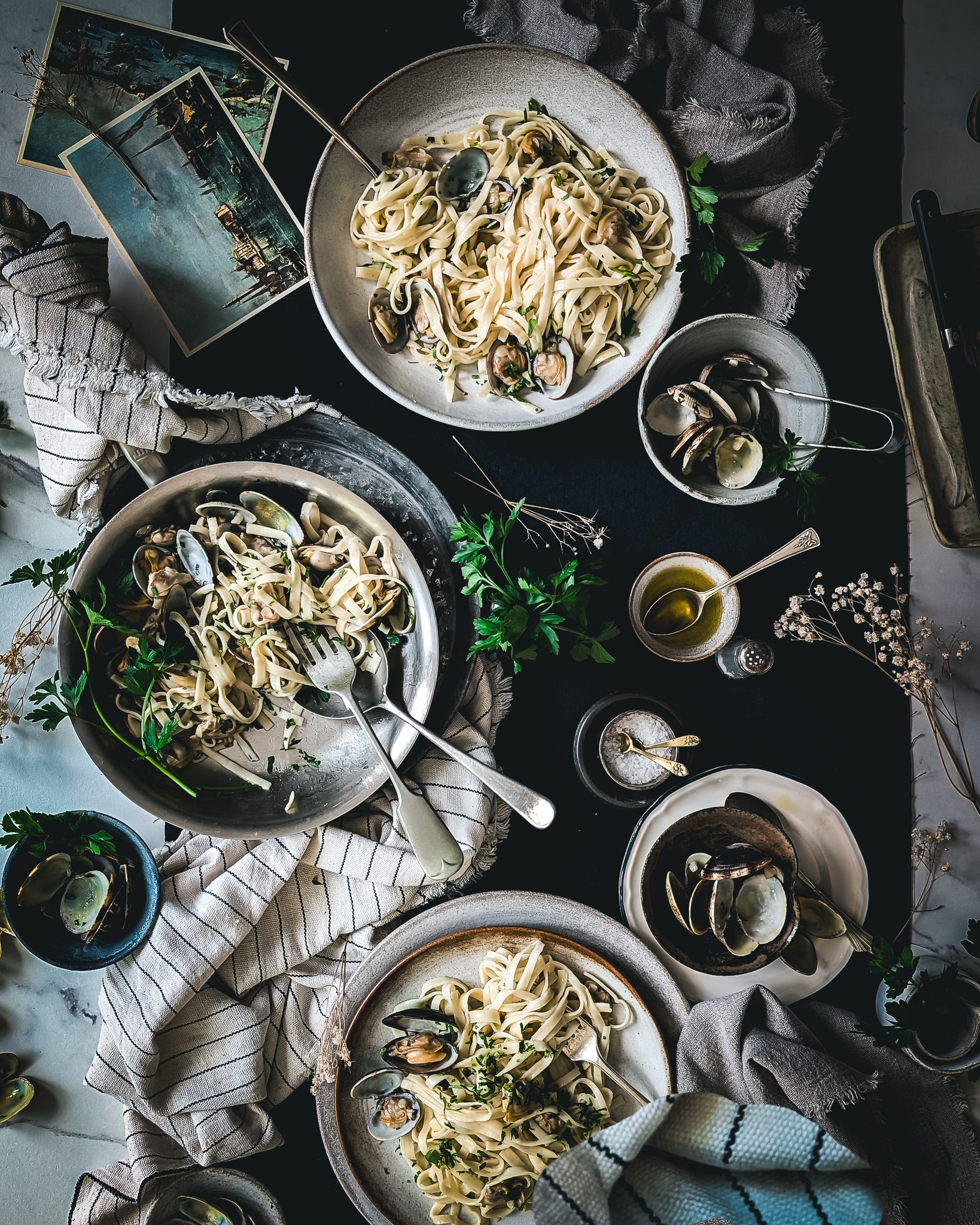
When a dish relies on so few ingredients, you notice them. You give them a little more intention and care. You let the handmade pasta, the vongole, and their natural juices do the work. A simple, generous dish, unexpected at autumn’s table, but entirely at home.
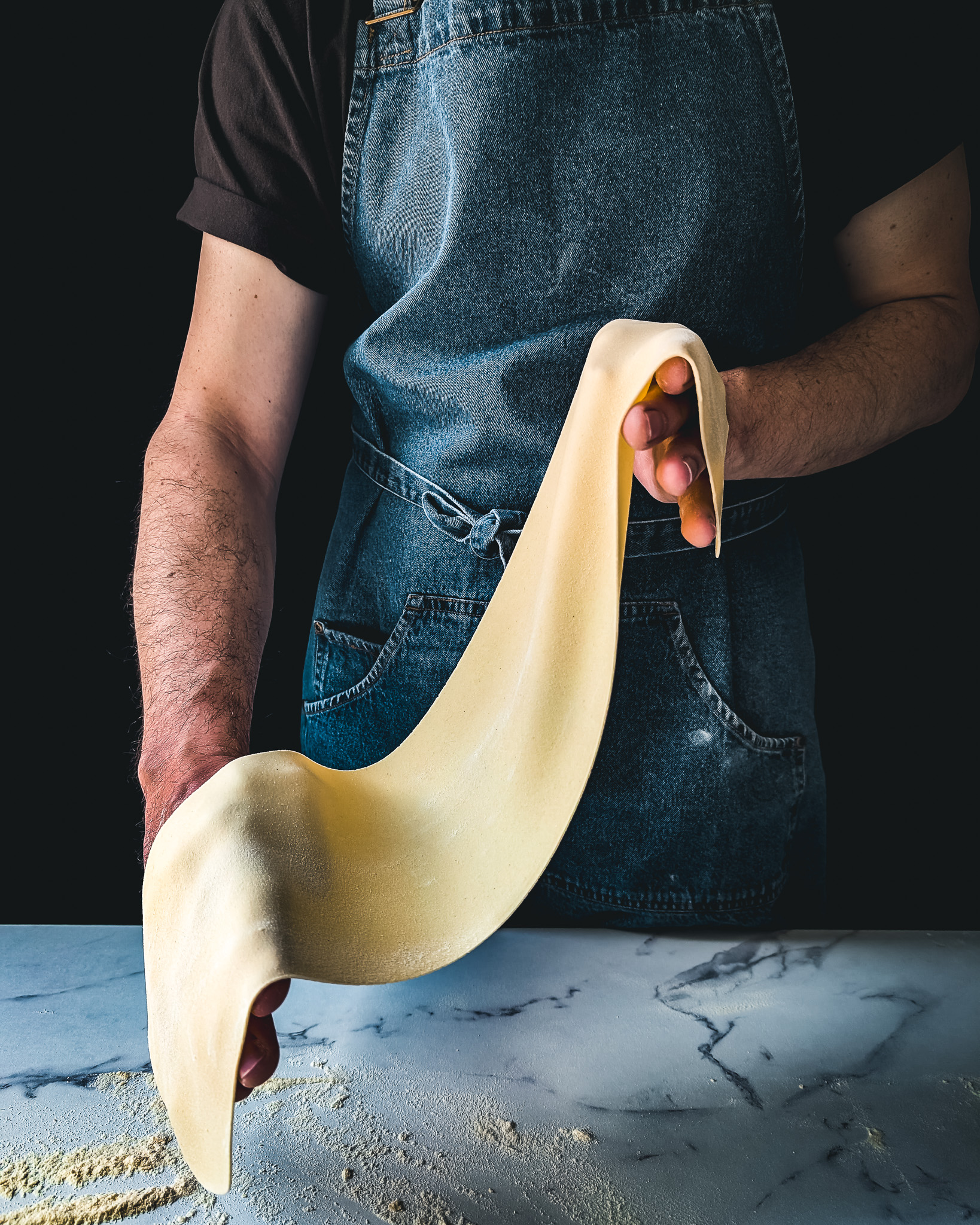
Notes from our Venetian kitchen
On the pasta
For this recipe we make fresh linguine using semolina flour and water, rather than egg pasta. This is the kind of pasta we prefer with seafood: simple, firm and with enough texture to hold onto the clam juices without competing with them.
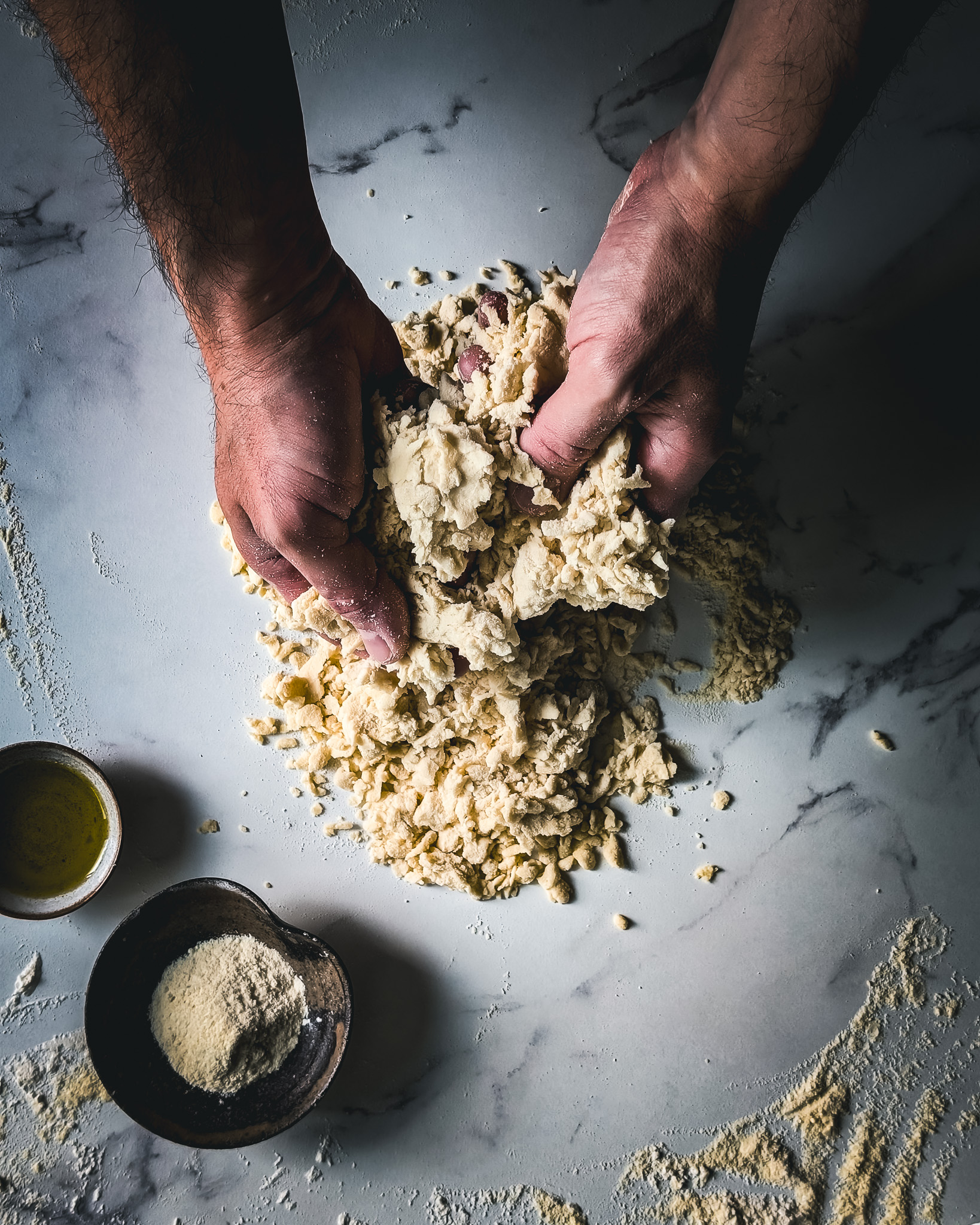
We use fine semolina flour, sometimes sold as semola "rimacinata" (ground twice). Add the water gradually as different flours can absorb slightly different amounts. The dough should feel firm but smooth, not sticky. If you have the time, let the dough rest before rolling it. It makes the pasta much easier to work with and gives you a more supple dough.
On the vongole
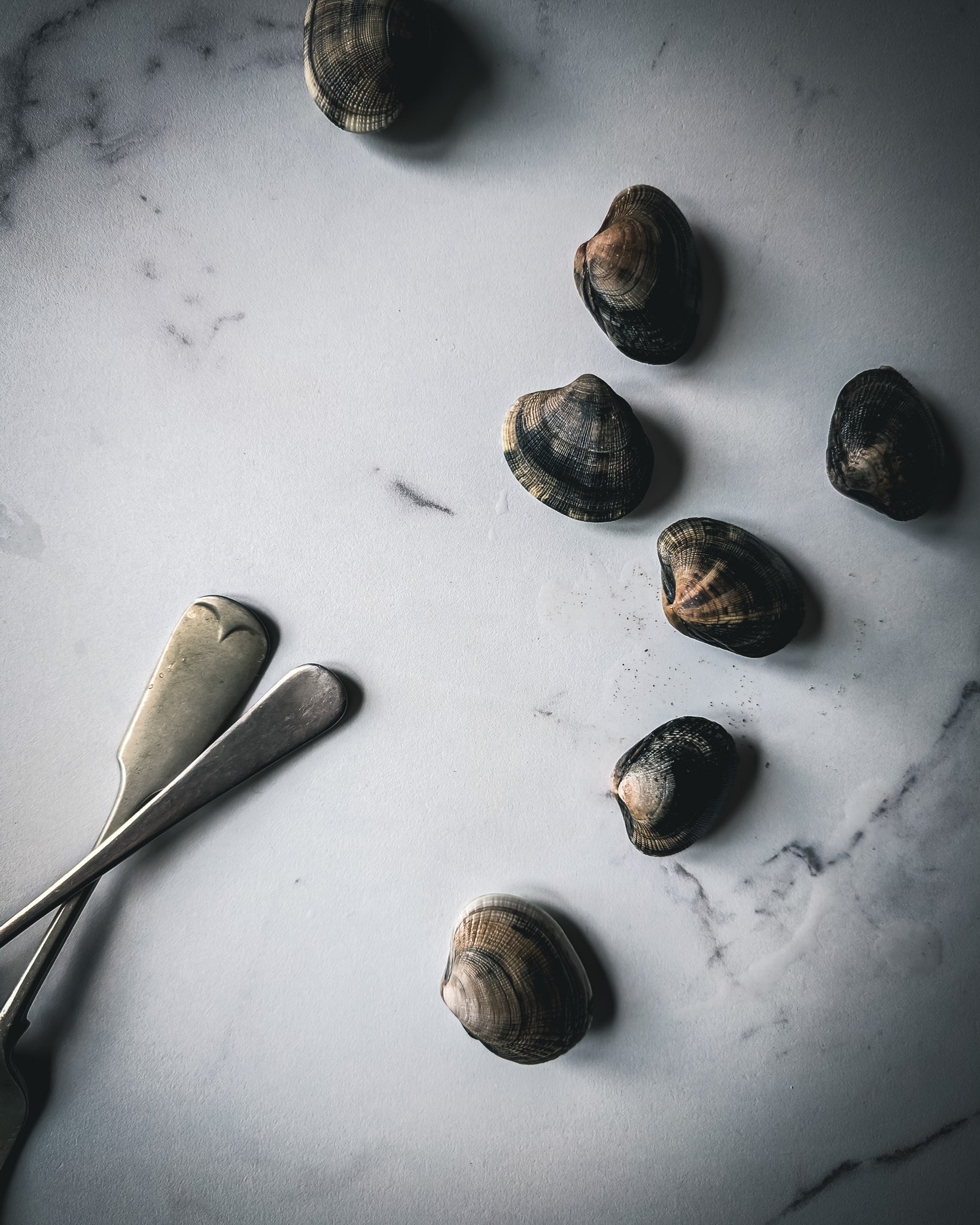
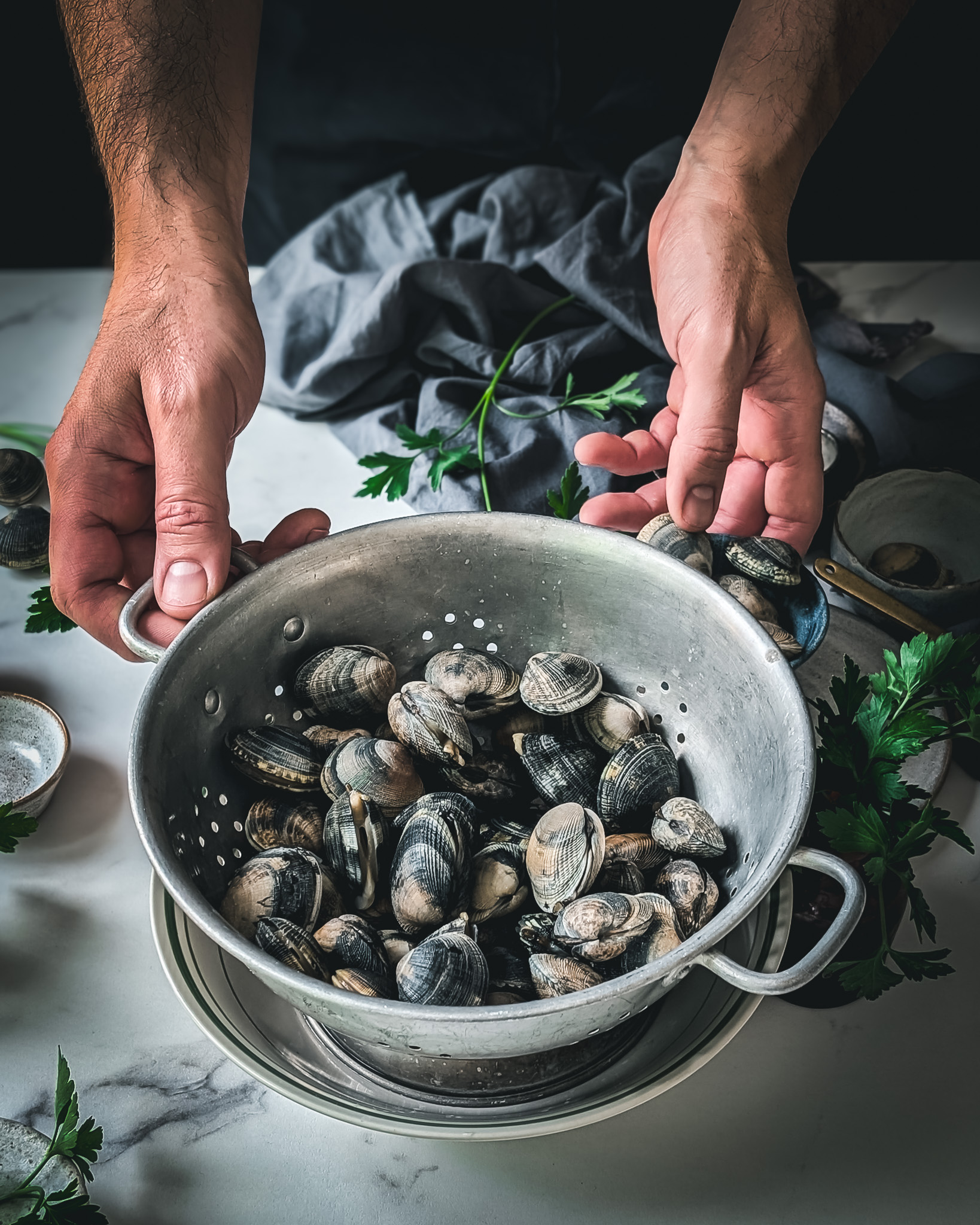
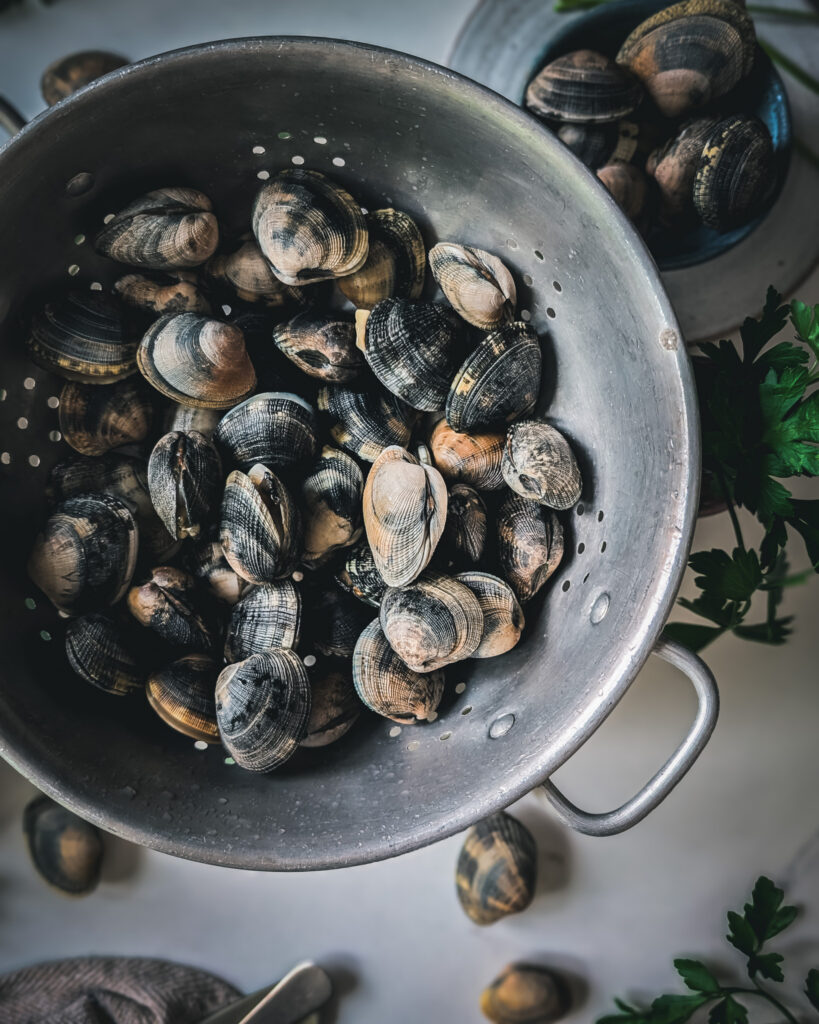
The clams are the heart of this dish, so buy the freshest you can find. Before cooking, rinse the thoroughly and purge them in generously salted cold water foracouple of hours to help them release any sand. The water should taste like the sea. For the maths geeks, consider 3% salt in the water (or 30g per litre). If your clams are particularly sandy, change the water and repeat the process. Always check them before cooking and discard any that are cracked or do not close when tapped. Once cooked, discard any that remain closed.
On the sauce
There really isn't a sauce in the traditional sense. The beauty of pasta alle vongole is the liquor released by the clams as they cook, mixed with good extra virgin olive oil, garlic and white wine. Cook the garlic gently. You want it to infuse the oil without becoming dark or bitter. Once the vongole go into the pan, turn up the heat, deglaze with prosecco and cover. They will release their own juices as they open. This is the liquid you want to keep.
On the pasta water
Fresh pasta cooks much more quickly than dried pasta, so keep an eye on it. We cook the linguine separately in well salted water and finish it in the pan with the vongole. Reserve some of the pasta water before draining. A splash can help bring everything together and create that silky coating around the linguine. The important thing is not to flood the dish. The vongole should remain the star.
On parsley
Fresh parsley goes in right at the end. It brings freshness to the dish and cuts through the richness of the olive oil without taking anything away from the delicate flavour of the clams.
On chilli
We sometimes add a little fresh chilli, but it is completely optional. For us, this is a dish where restraint matters. If you use chilli, keep it gentle. You want a little warmth in the background, not enough to mask the flavour of the sea.
On spaghetti or linguine
Spaghetti is probably the pasta most people associate with pasta alle vongole, and there is absolutely nothing wrong with it. We chose linguine this time because we were making the pasta ourselves. The slightly broader shape gives the clam juices plenty of surface to cling to, and there is something particularly satisfying about twirling fresh linguine through that simple sauce. In the end, this is one of those questions of preference rather than rules.
On store-bought vs. handmade
Making pasta from scratch is a beautiful ritual when you have the time to slow down, but life doesn’t always afford us that luxury. If you’re making this on a busy weeknight, high-quality store-bought spaghetti or linguine - preferably bronze-drawn (trafilata al bronzo) - works wonderfully. It retains that rough, artisanal texture that holds onto the clam juices just as well. The magic of this dish lies in its heart and simplicity, whether your pasta was rolled by hand an hour ago or taken from a packet.
Ingredients
Serves 4
For the fresh linguine
- 500g fine semolina flour, preferably semola rimacinata
- 260ml water, approximately
- 1 Tbsp Extra-virgin olive oil
For the vongole sauce
- 2 kg fresh vongole (clams)
- 4 tbsp extra virgin olive oil
- 2 large garlic cloves, lightly crushed
- 200ml dry white wine or prosecco
- 1 handful fresh parsley, finely chopped
- Fine sea salt
- Black pepper
Directions
1. Purge the vongole
Place the clams in a large bowl of cold, salted water (see tips above).
Leave them for about 1 hour so they can release any sand. If the clams are particularly sandy, drain them and repeat with fresh salted water.
Rinse them well under cold running water.
Discard any cracked clams or any that remain open after being gently tapped.
2. Make the pasta dough
Place the semolina on a clean work surface or in a large bowl and make a well in the centre.
Add almost all the water and the olive oil, mixing with your fingers as you go. Continue kneading until you have a firm, smooth dough.
The exact amount of water can vary slightly depending on the flour, so don’t add it all in one go, take your time. The dough should not be sticky.
Knead for 8–10 minutes until smooth and elastic.
Wrap the dough or cover it with an upturned bowl and leave to rest for at least 30 minutes.
3. Make the linguine
Divide the dough into smaller pieces and roll each one through a pasta machine, gradually reducing the thickness until you have a thin sheet.
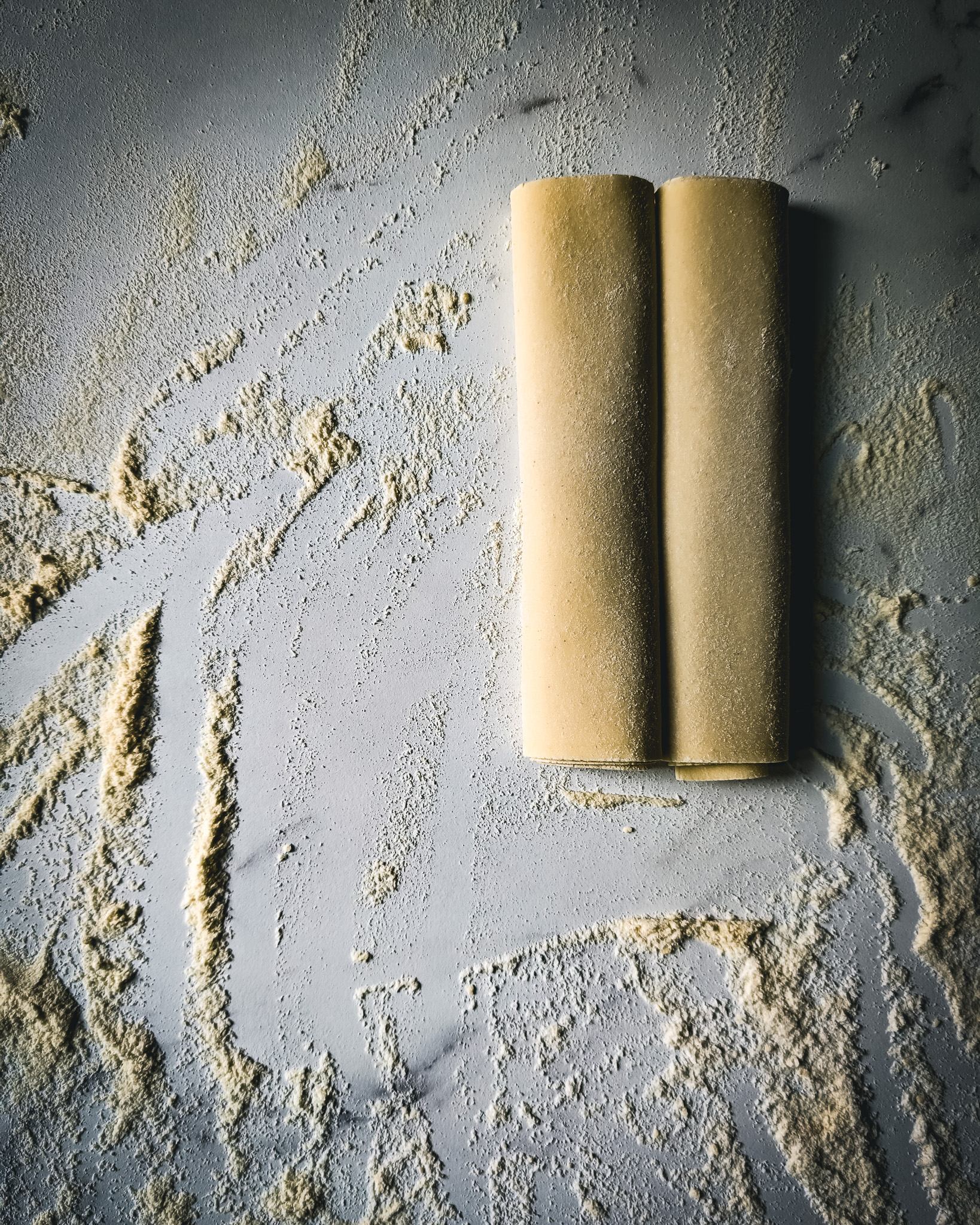
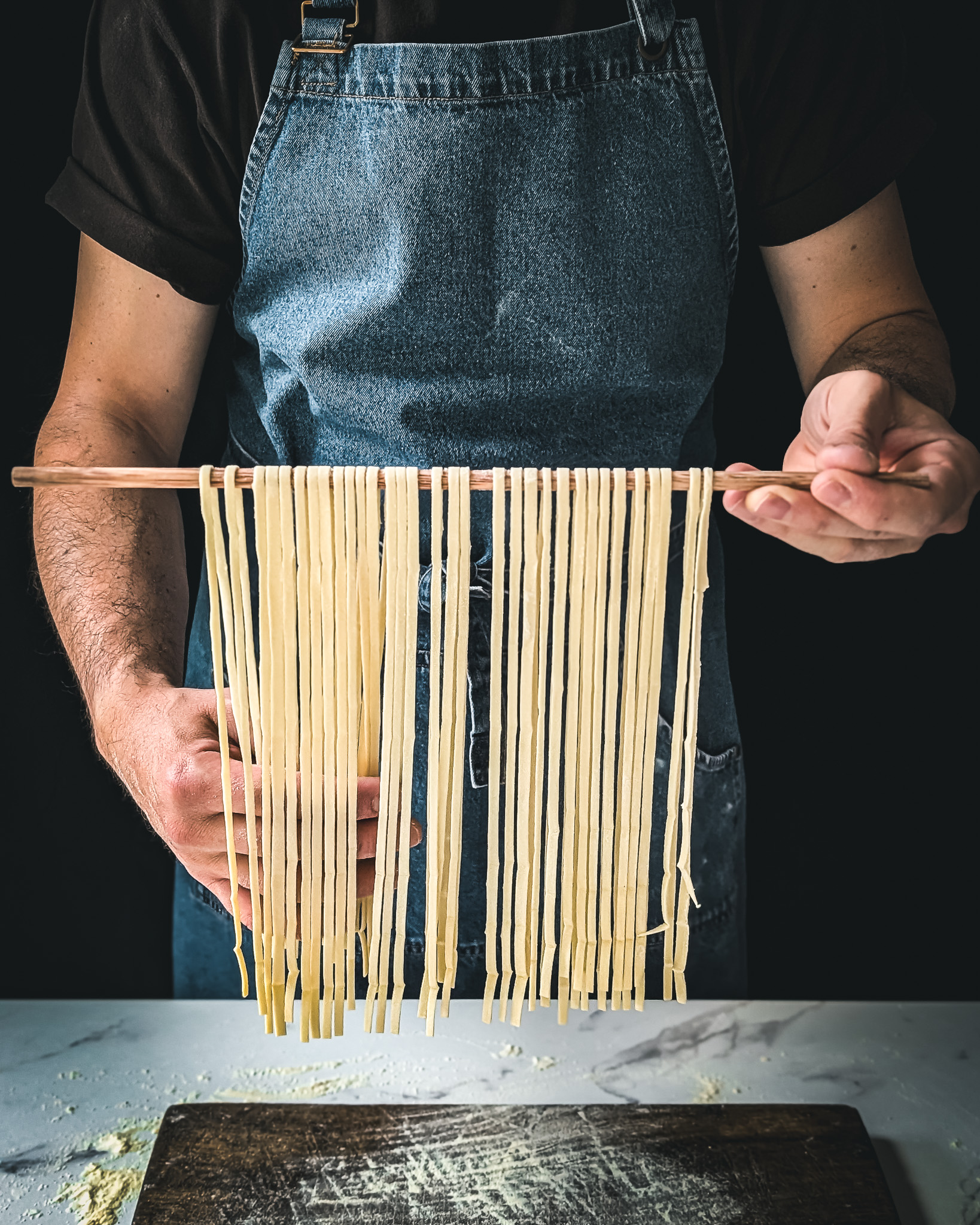
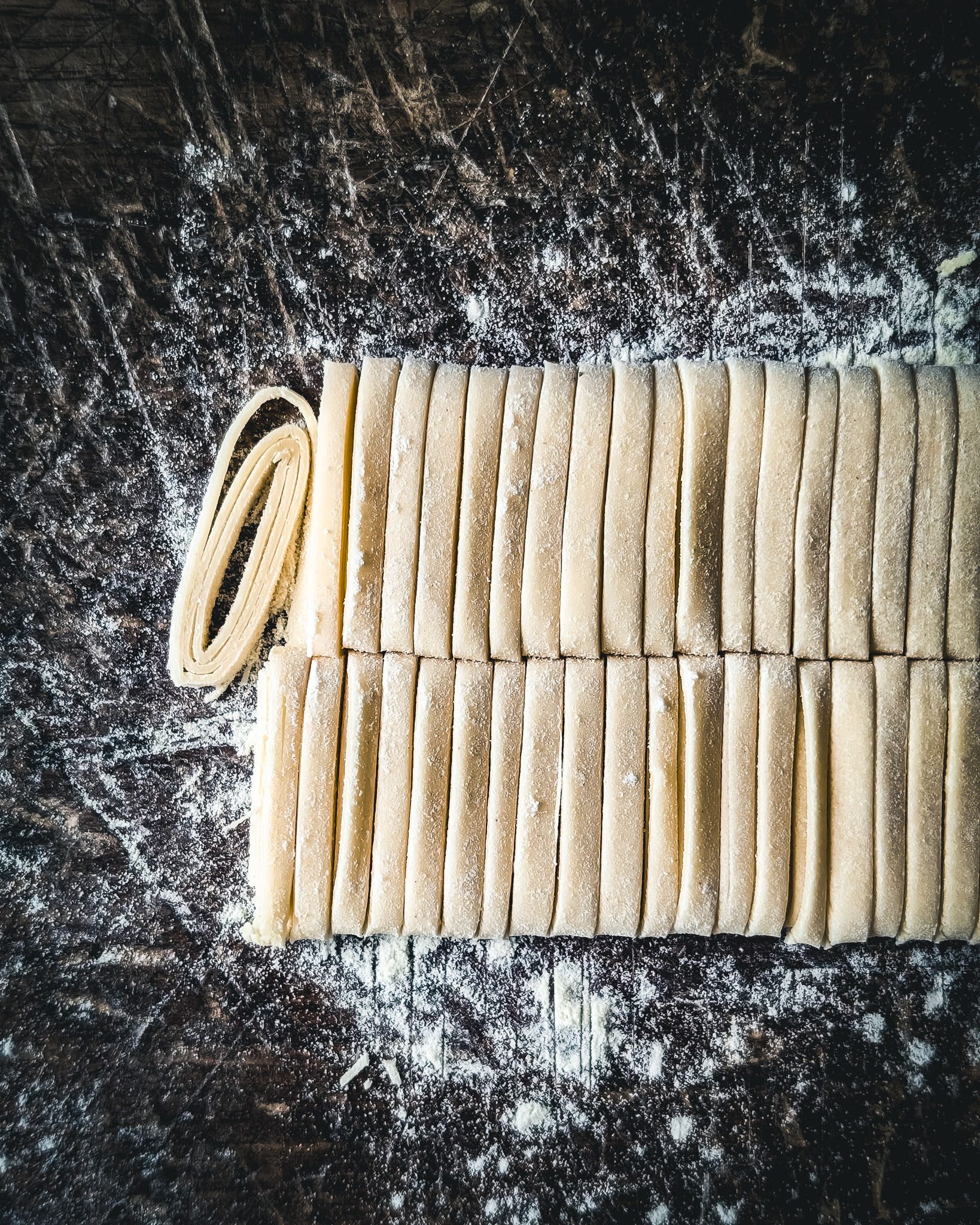
Pass the sheets through the linguine cutter, or cut them by hand into long, narrow strips. If cutting by hand, folding up the sheet as shown in the photos can help to be more precise.
Dust lightly with semolina and set aside while you prepare the vongole.
4. Start the vongole
Heat the olive oil in a large, wide frying pan with a lid over medium low heat.
Add the garlic and let it gently infuse the oil for a couple of minutes. It should soften and become fragrant without taking on too much colour.
If using chilli, add it now.
5. Cook the vongole
Increase the heat to medium-high and add the clams to the pan and pour in the white wine. It should bubble immediately.
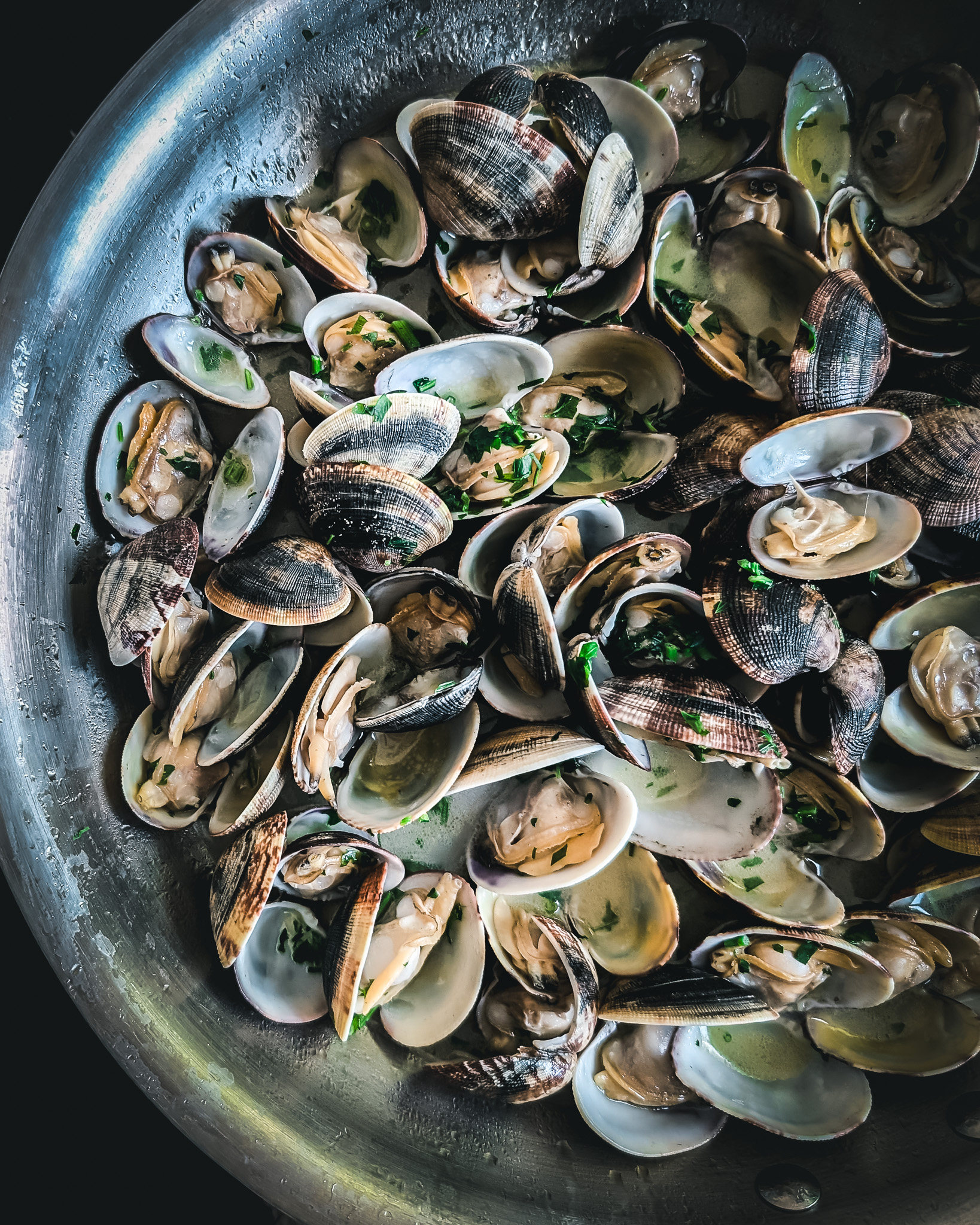
Let the alcohol cook off for a minute, then cover with a lid. Cook for around 2–3 minutes, shaking the pan occasionally, until the clams have opened.
Remove from the heat.
Discard any clams that have not opened.
Remove roughly half of the clams from their shells, leaving the rest whole for serving. Keep all the cooking liquor in the pan. That’s where the flavour is.
6. Cook the fresh linguine
Bring a large pot of water to the boil and salt it generously.
Add the fresh linguine and cook until just tender. Fresh pasta cooks very quickly, usually in just a few minutes depending on its thickness, so taste it rather than relying entirely on a timer.
Before draining, reserve a cup of the pasta cooking water.
7. Bring everything together
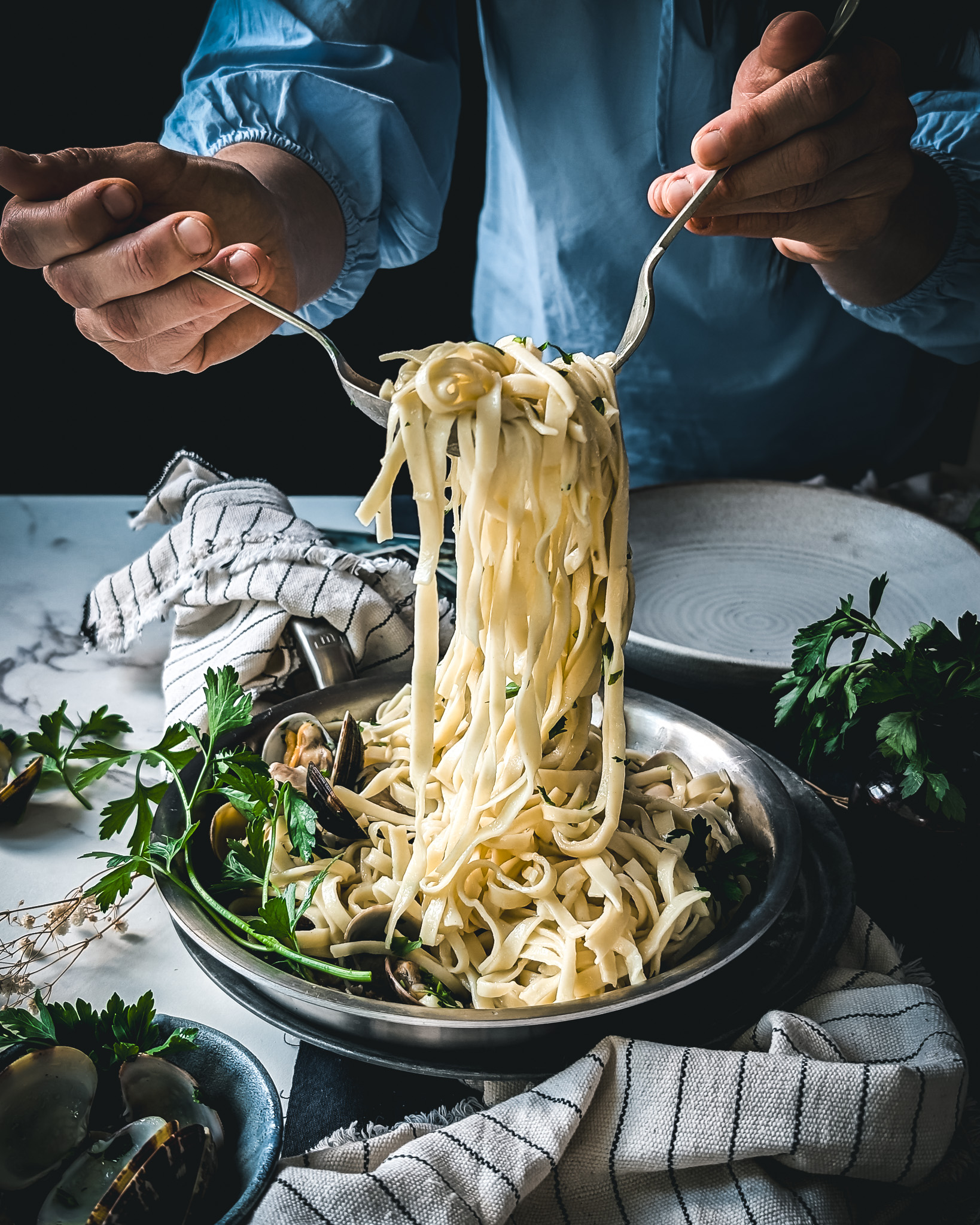
Add the drained linguine directly to the pan with the vongole and their cooking liquor.
Toss everything together over medium heat, adding a little of the reserved pasta water if needed. Be mindful about how much pasta water you add, as it will increasingly make the dish saltier. The clams and their liquor will also already be naturally salty.
The pasta should become glossy and lightly coated with the clam liquor and olive oil.
Add the chopped parsley and the shelled clams.
Toss once more and taste for seasoning.
8. Serve
Divide the linguine between warm plates or bowls.
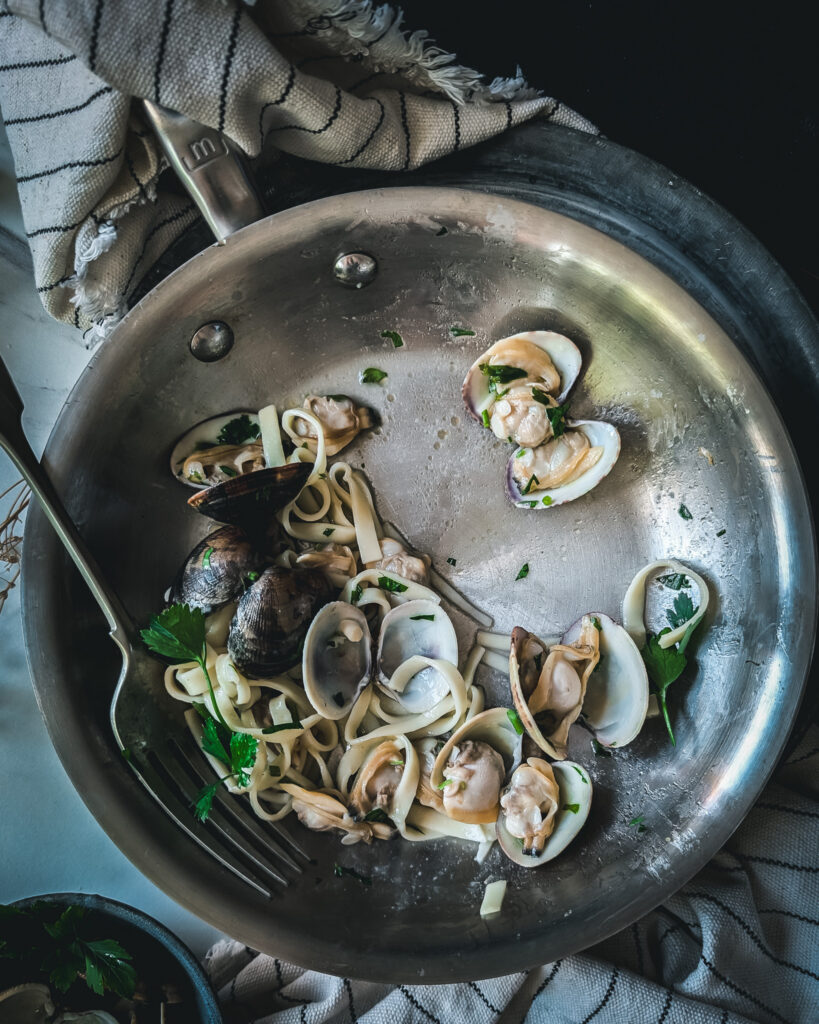
Finish with the remaining clams in their shells, another little drizzle of extra virgin olive oil and a scattering of fresh parsley. Serve immediately.
Share this recipe: