
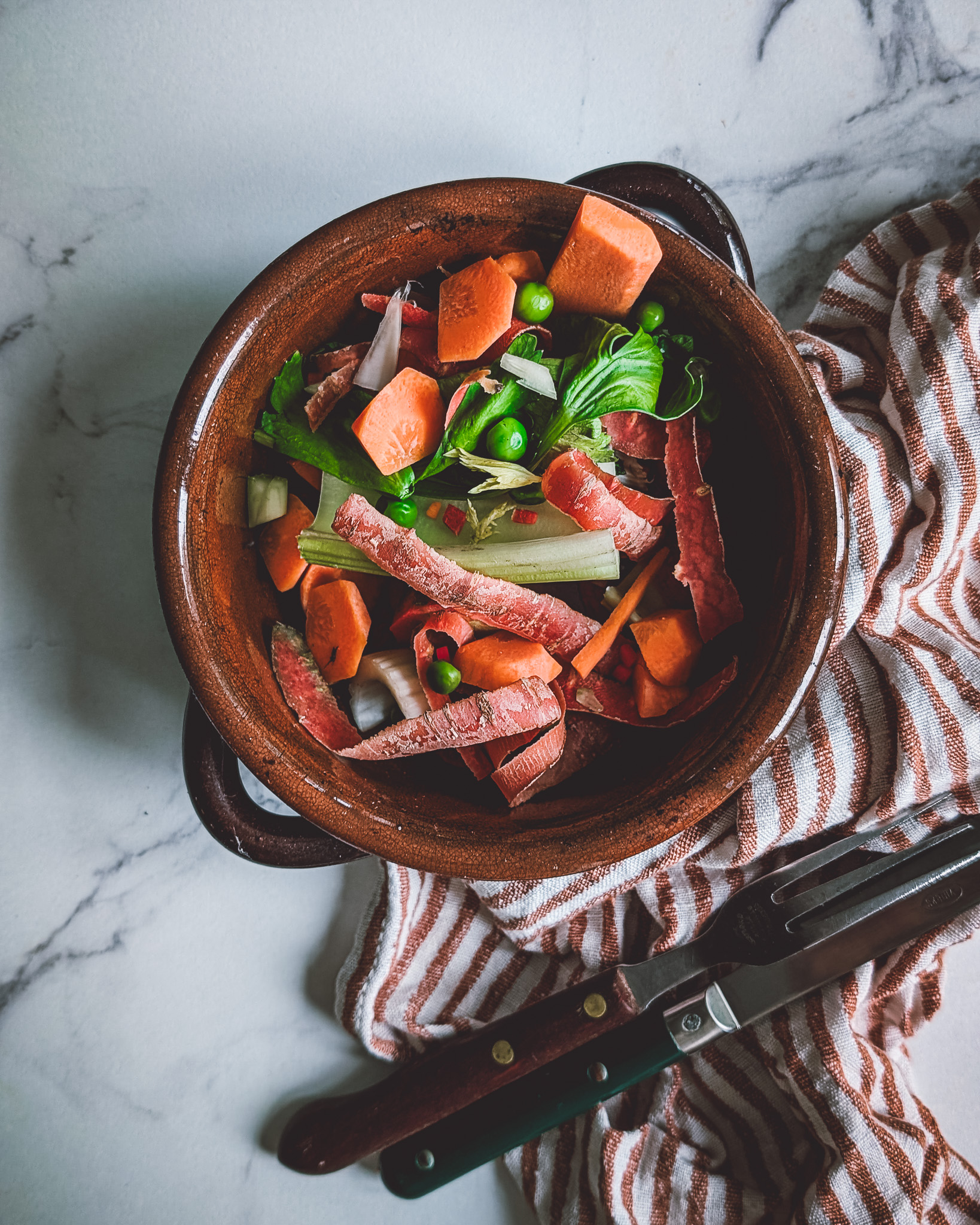
Beef stew with potatoes is a classic in so many kitchens, and you’ll find a version of it in almost every cuisine. But for me, spezzatino con patate is more than a dish that I like to bring back in autumn and winter. It’s memories of my mum, and my childhood, where nothing, especially food, went to waste.
Money was always tight at home, and Mum was constantly finding ways to make it stretch. She doesn’t have a driving licence, so I remember her going from market to market on her old bicycle, and from grocery shop to grocery shop, looking for the best deals. Sometimes I would go with her, no matter the weather.
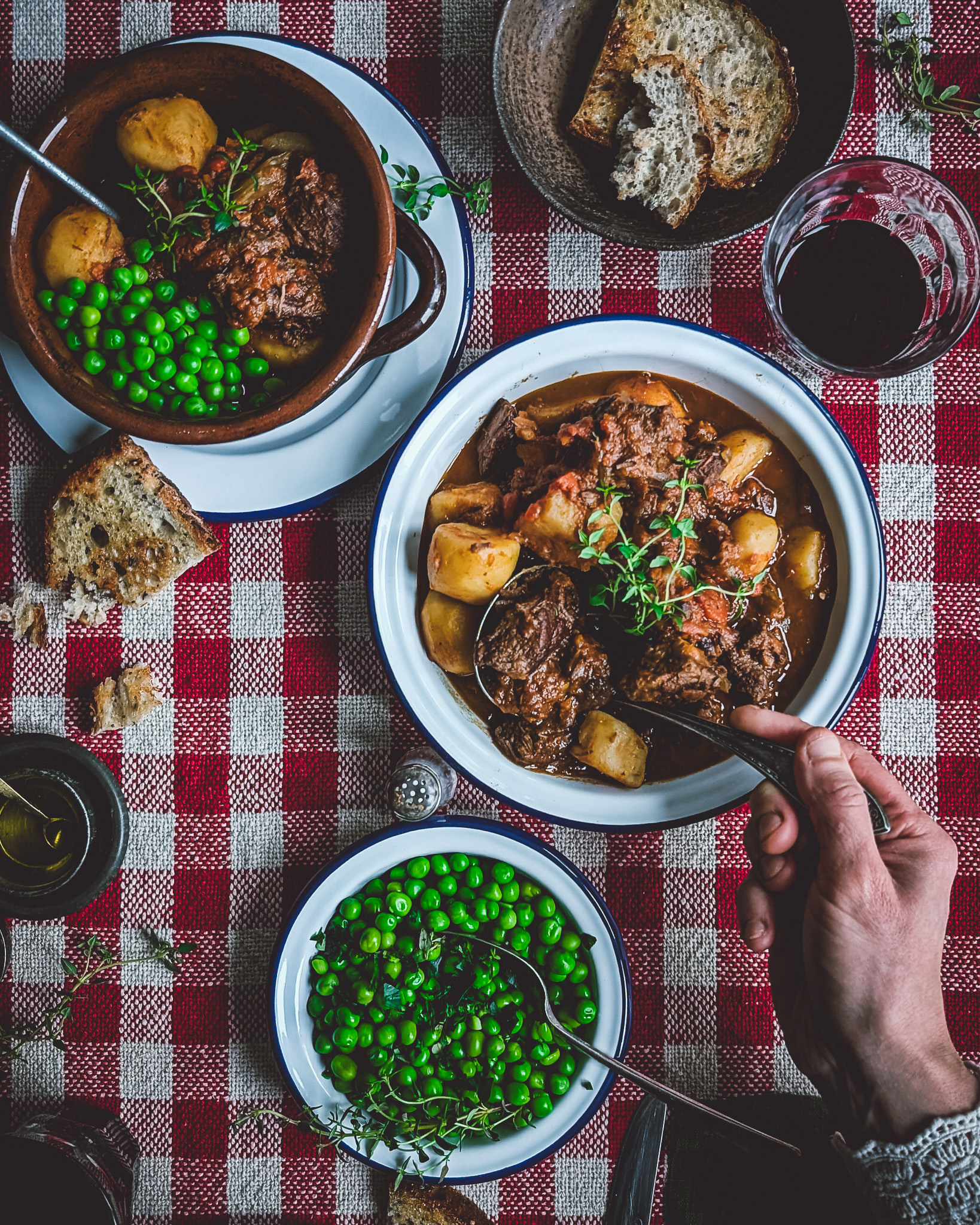
A beef stew was one of the dishes she made most often when the weather turned cold. It was inexpensive, filling, and it fed us all. The meat was never the expensive kind. Mum knew which cuts cost less and, more importantly, she knew how to cook them.
The cheaper the cut, the longer it needs to cook, so spezzatino also meant hours on the hob.
As the oldest of three siblings, I was often the one left in charge of checking the pan while Mum was upstairs doing chores. Every now and then the shouting would come from the stairs:
“Are you checking that pan, Fabioooo? Careful that it doesn’t catch!”
The truth is that I didn’t need much encouragement to check on it. As the stew cooked, the smell slowly spread through the whole house. I can still remember that smell. Every time I lifted the lid, the meat looked a little more tender and the sauce a little richer.
Of course, I was usually hoping it would somehow be ready earlier than expected. It never was. A good stew takes its time.
I think that’s one of the reasons I still like making it today. There’s something comforting about a meal that can’t be rushed. Once everything is in the pot, there isn’t much to do apart from give it an occasional stir and let time do the hard work.
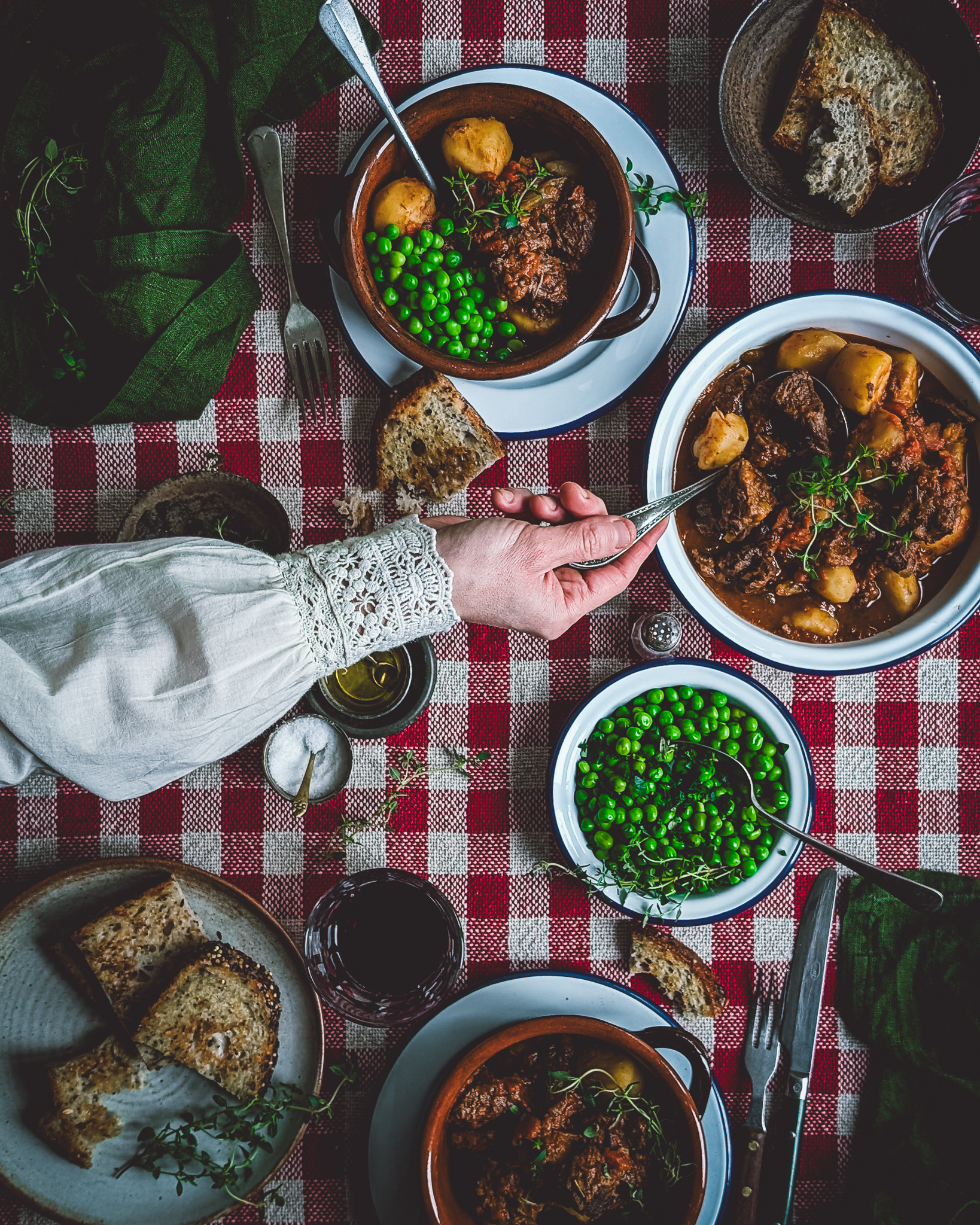
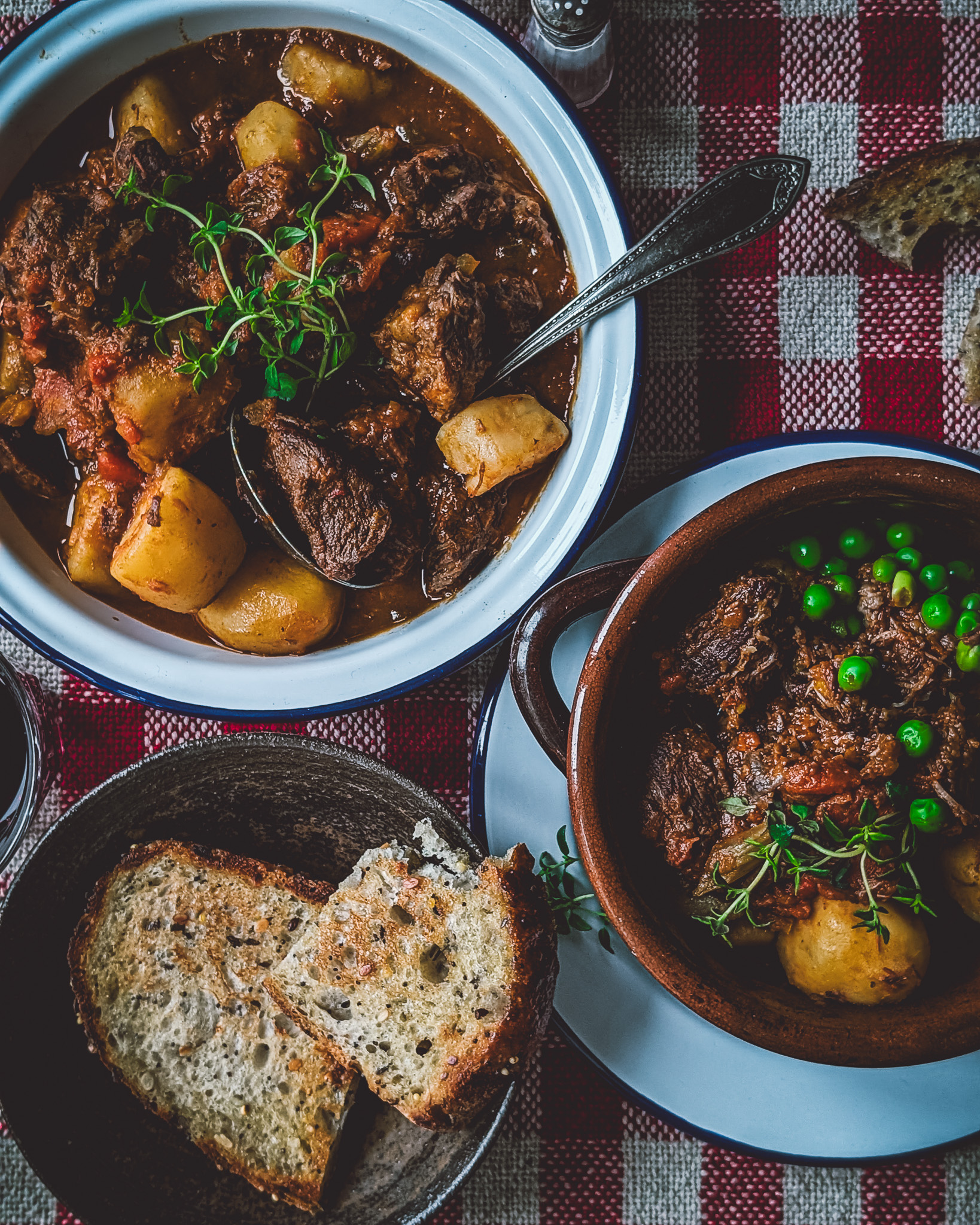
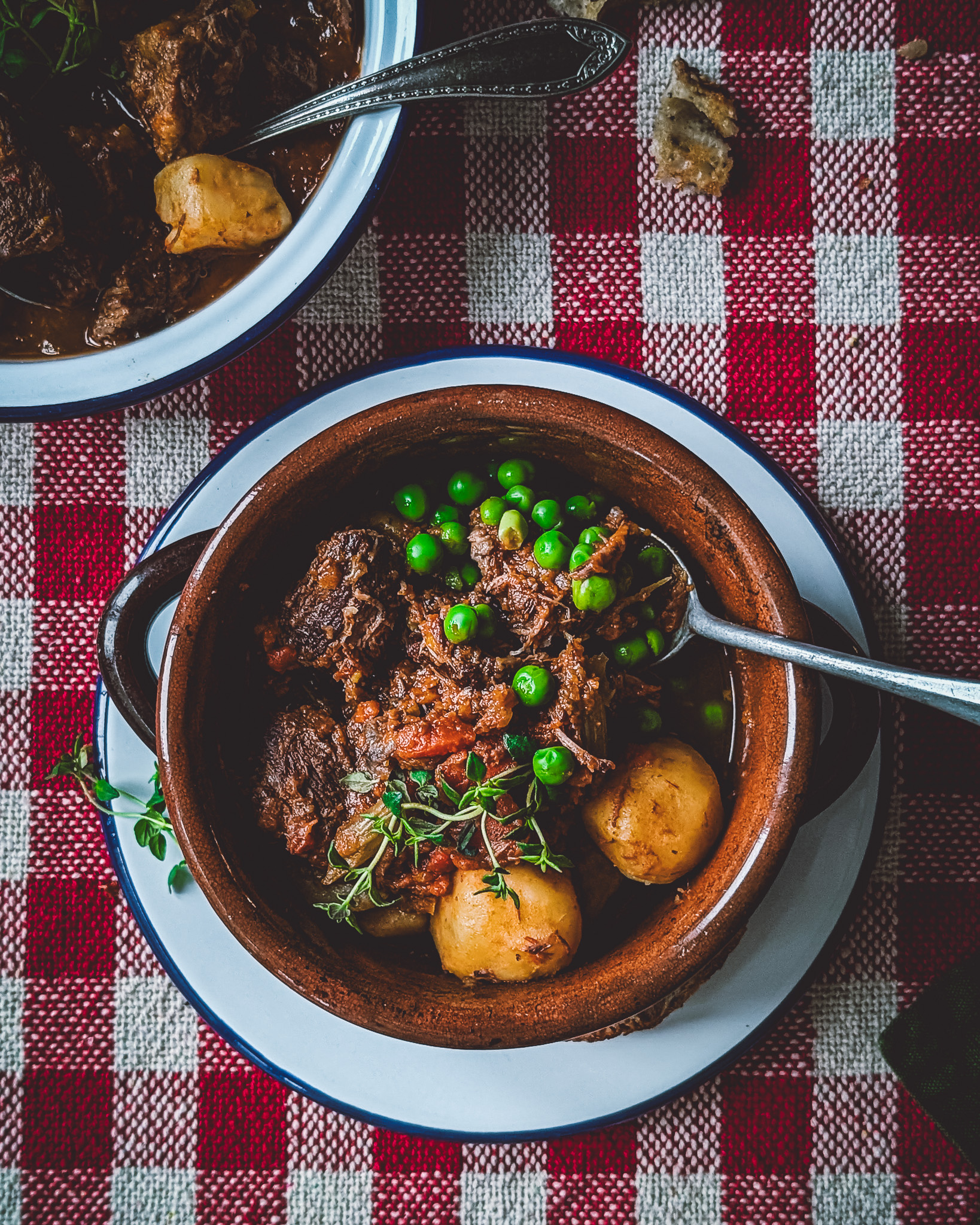
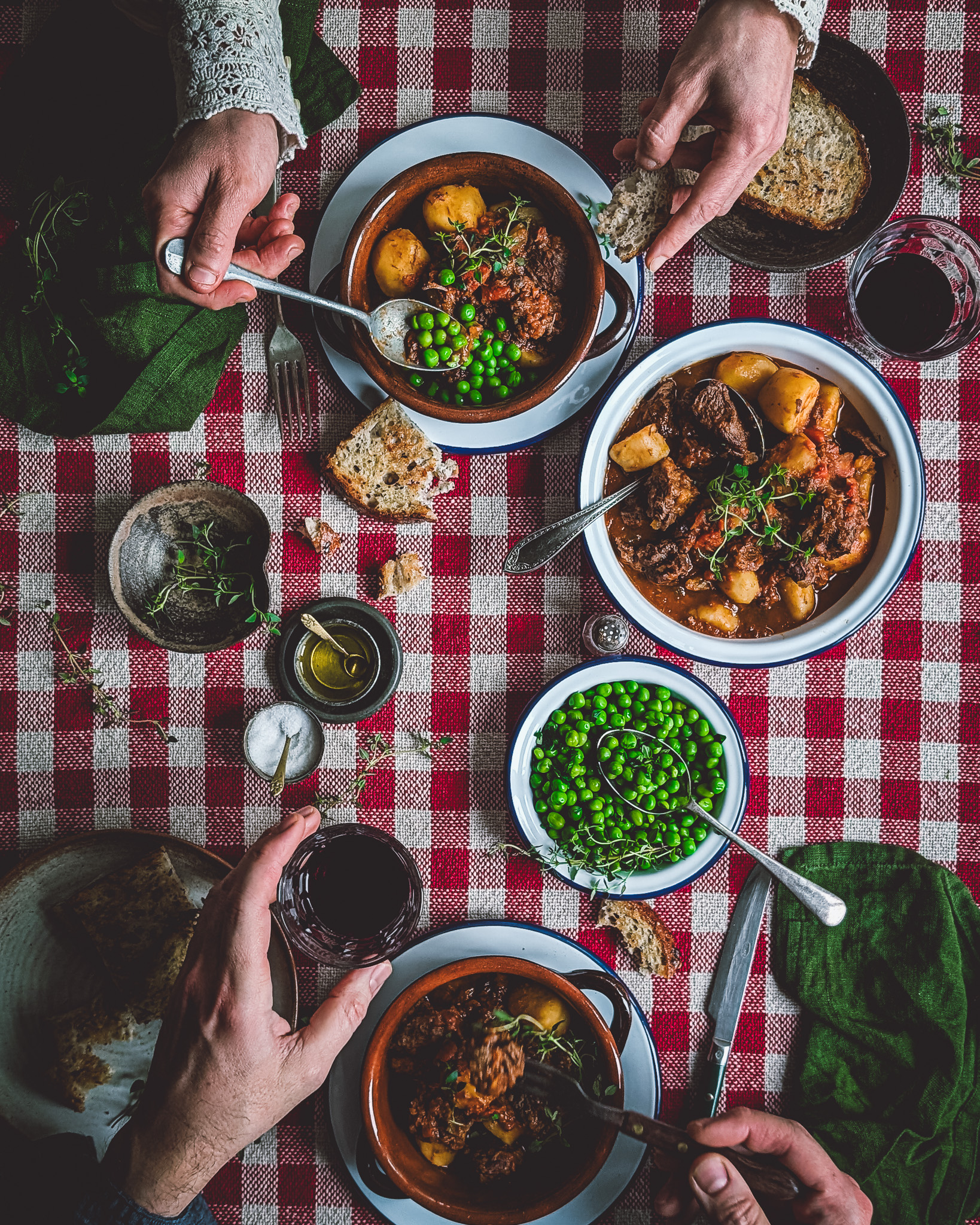
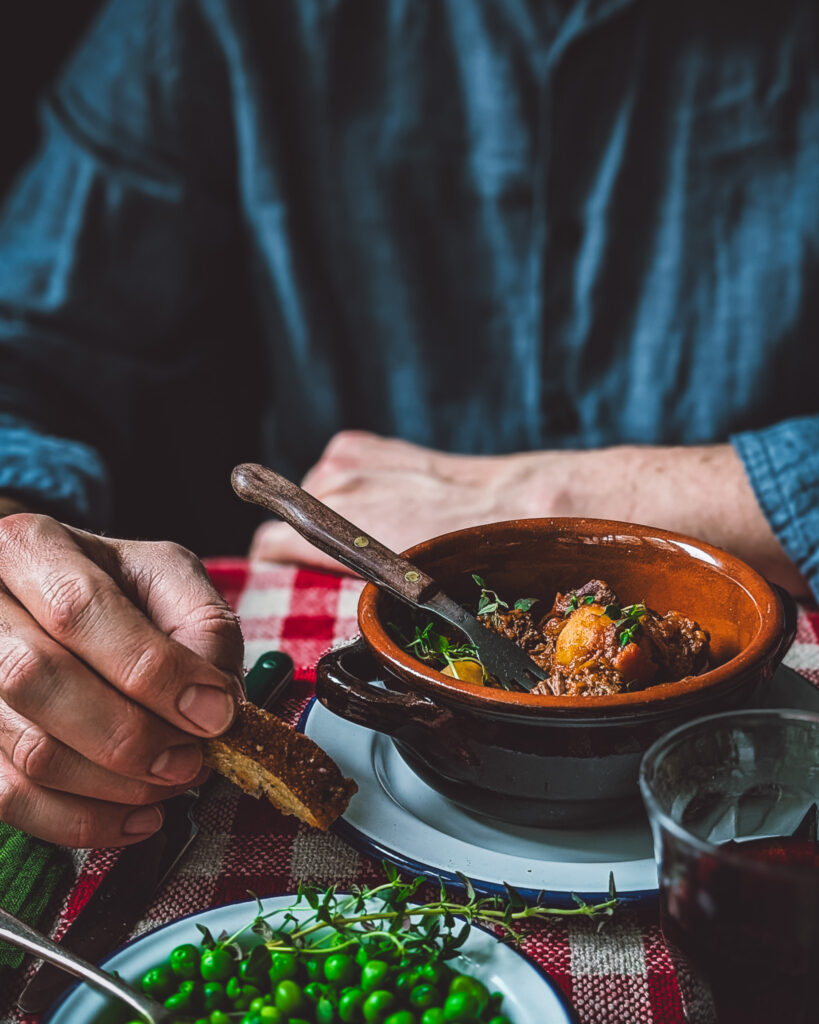
When it was finally ready, we’d eat it with bread and, sometimes, with polenta also on the side. And, the best part was always the sauce at the bottom of the bowl. In our house, leaving it behind wasn’t really an option. That’s what the bread was for. There would always be a piece nearby, ready for la scarpetta – which means using a piece of bread to wipe up every last bit of sauce – or, in Venetian dialect, “tociar“.
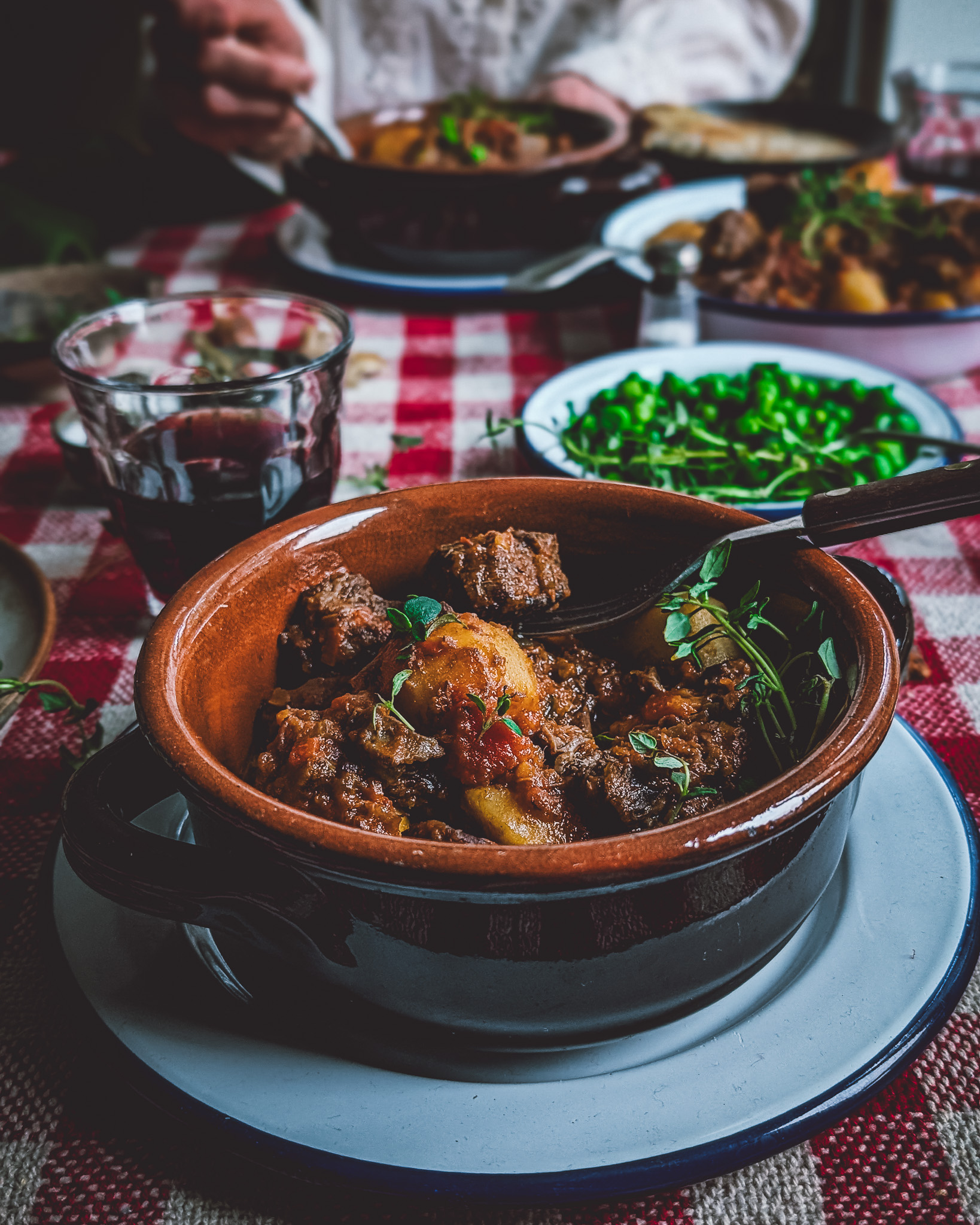
Sometimes Mum would tenderise the meat in a pressure cooker first. We don’t have one here in London, and we like making it the traditional way anyway: long and slow on the hob, with plenty of time for the flavours to come together.
This is another humble recipe, and another one about resourcefulness. It doesn’t ask for expensive ingredients or complicated techniques. Just a few simple ingredients, a little attention, and a bit of patience.
The reward is a rich, comforting stew that tastes even better when the weather outside is cold.
Here’s the recipe exactly as we make it at home.
Fabio
Notes from our Venetian kitchen
Which cut of beef?
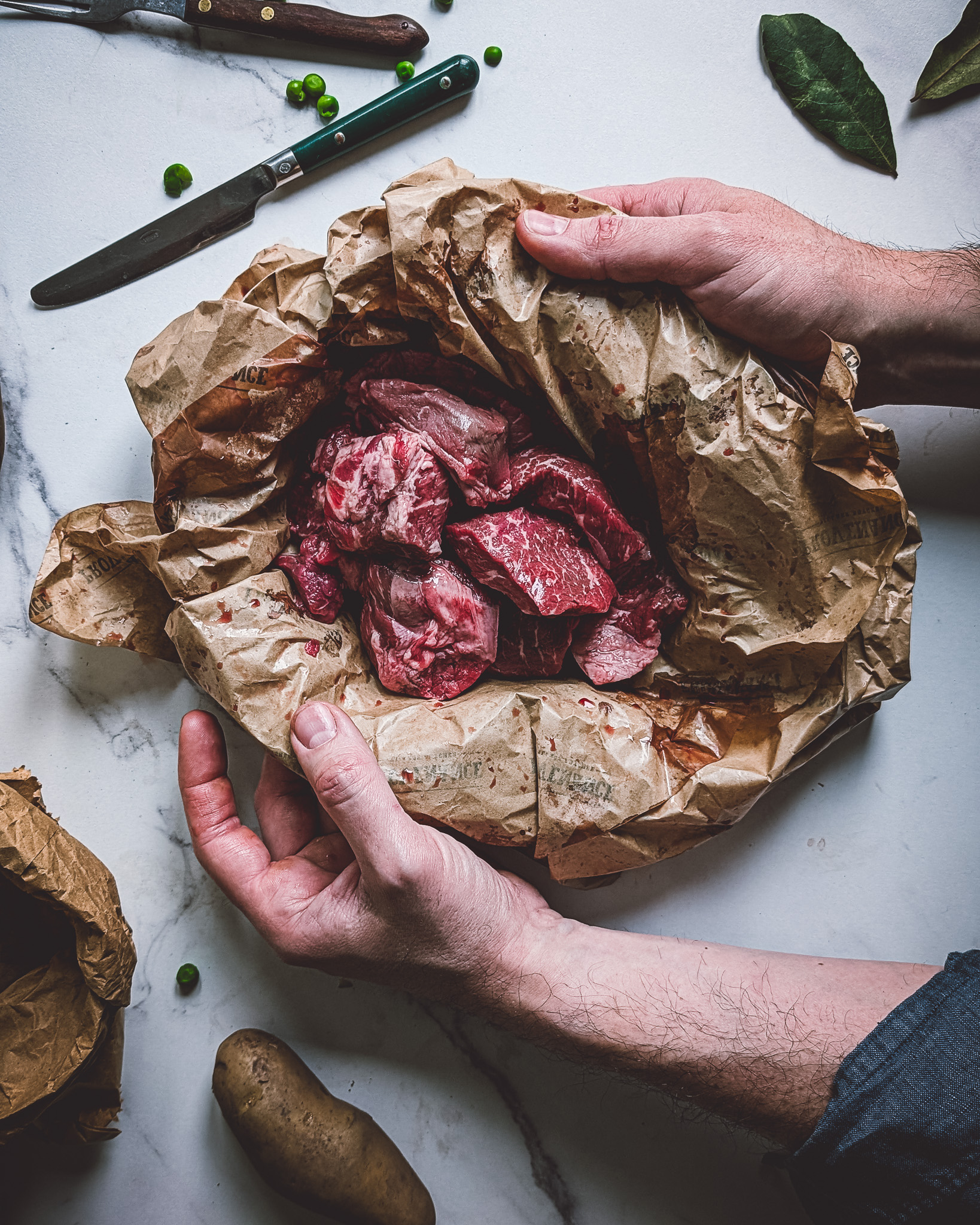
The good news is that this recipe doesn't need expensive meat. In fact, some of the best stews are made with cheaper cuts because they have more connective tissue and flavour. Given enough time, they become wonderfully tender. Beef chuck, cheek or shin all work well here. Just remember: the tougher the cut, the more time you'll need to give it. This recipe uses chuck.
Don't rush the cooking
If there's one secret to a good spezzatino, it's time. You want gentle, slow cooking rather than a fast boil. The meat should become soft enough to cut with a spoon, and the sauce should reduce naturally and become rich and glossy. For us, this usually means around 2½ to 3 hours on the hob, sometimes a little longer depending on the meat.
Which type of potatoes?
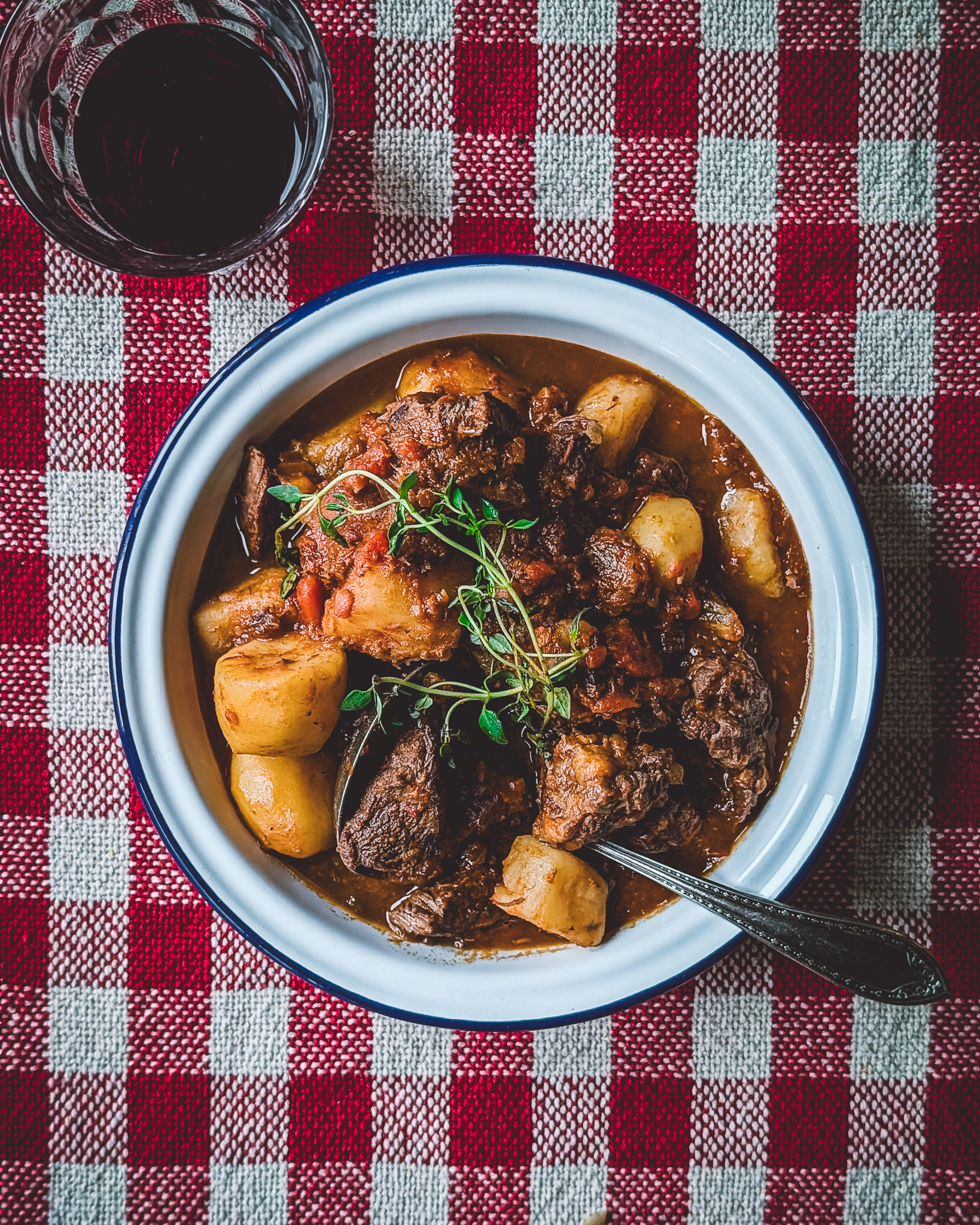
We usually use floury potatoes because they soften slightly and help thicken the sauce as they cook. Don't cut them too small or they'll disappear into the stew by the end of cooking. Large chunks hold their shape better and give a nicer texture.
The vegetables
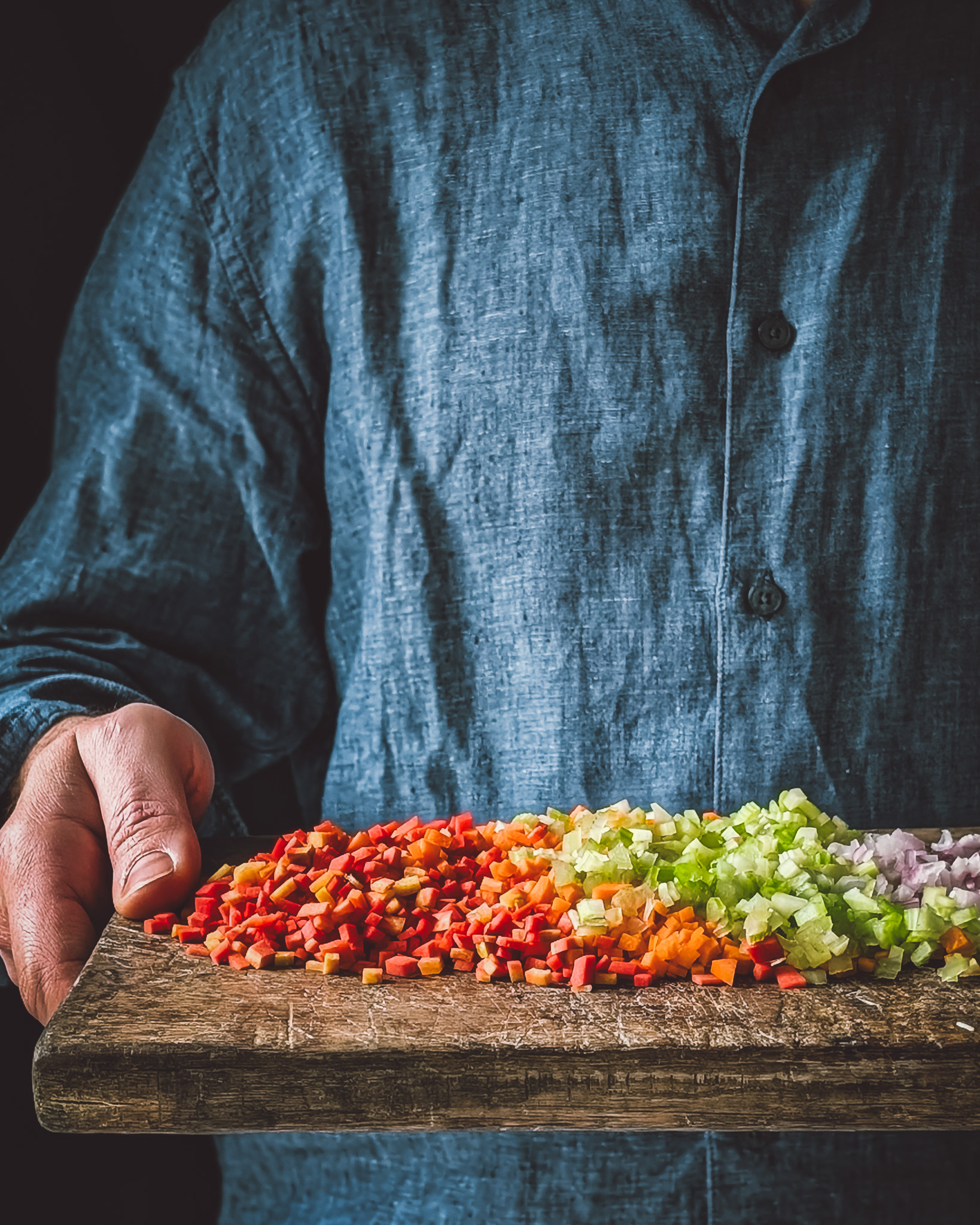
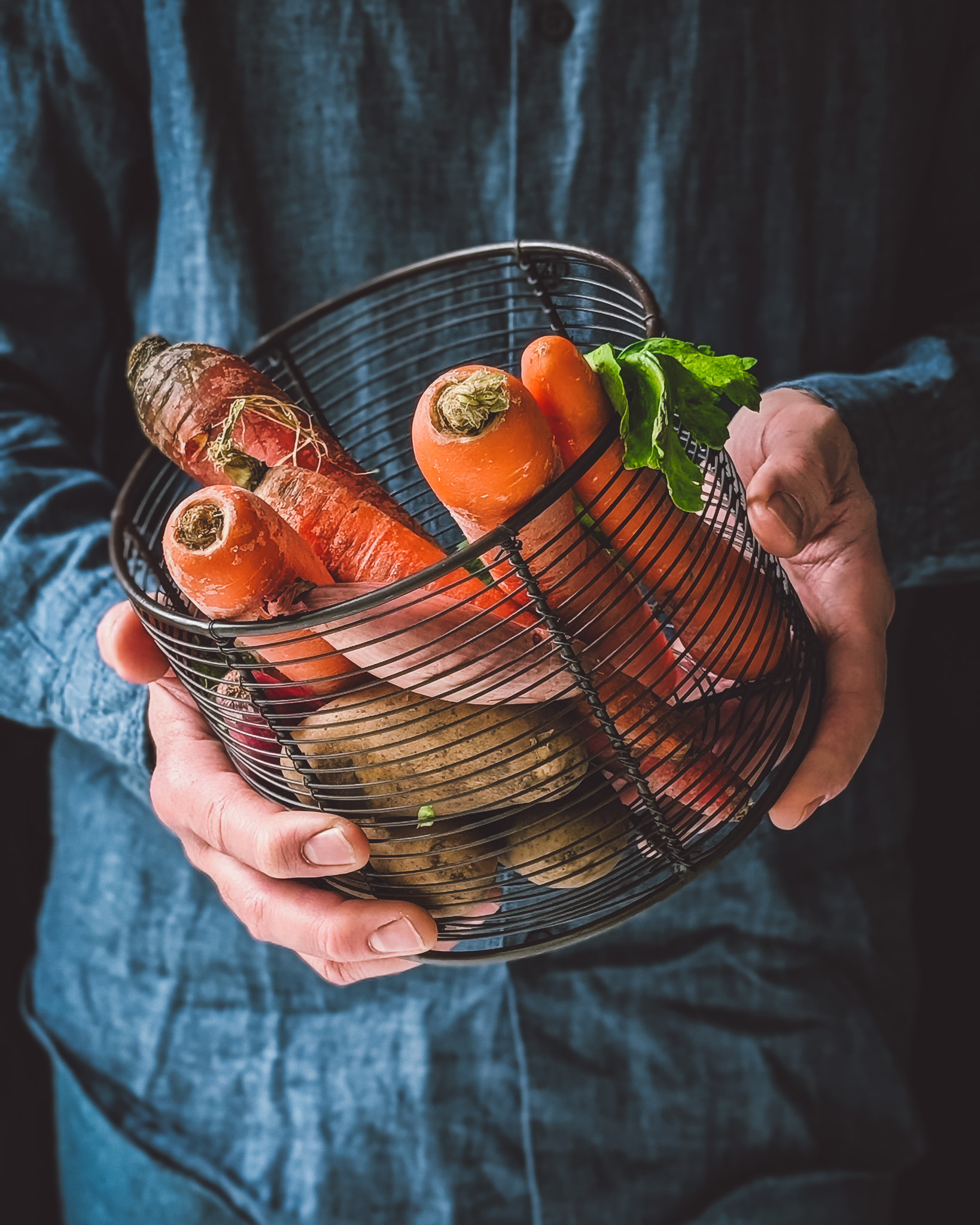
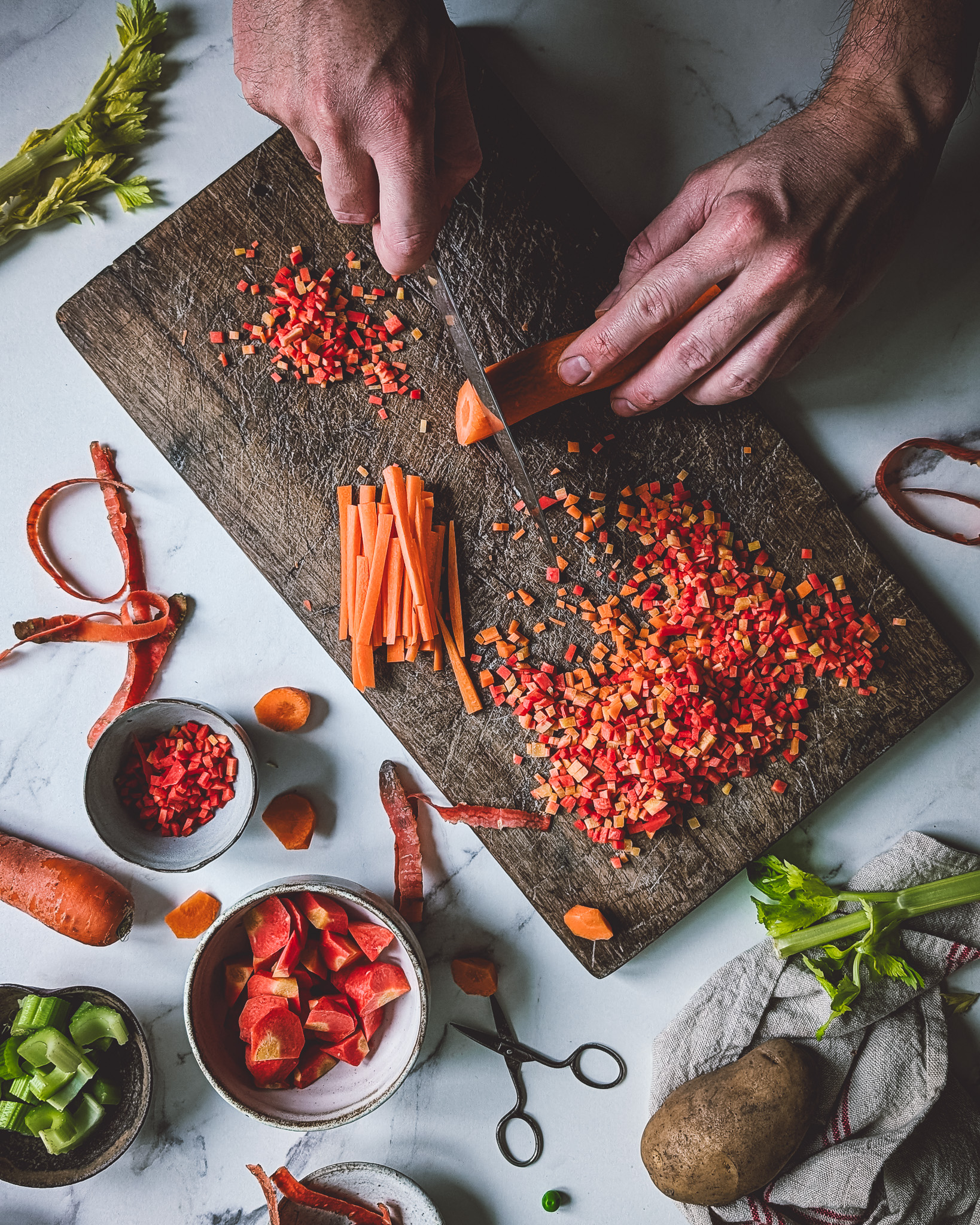
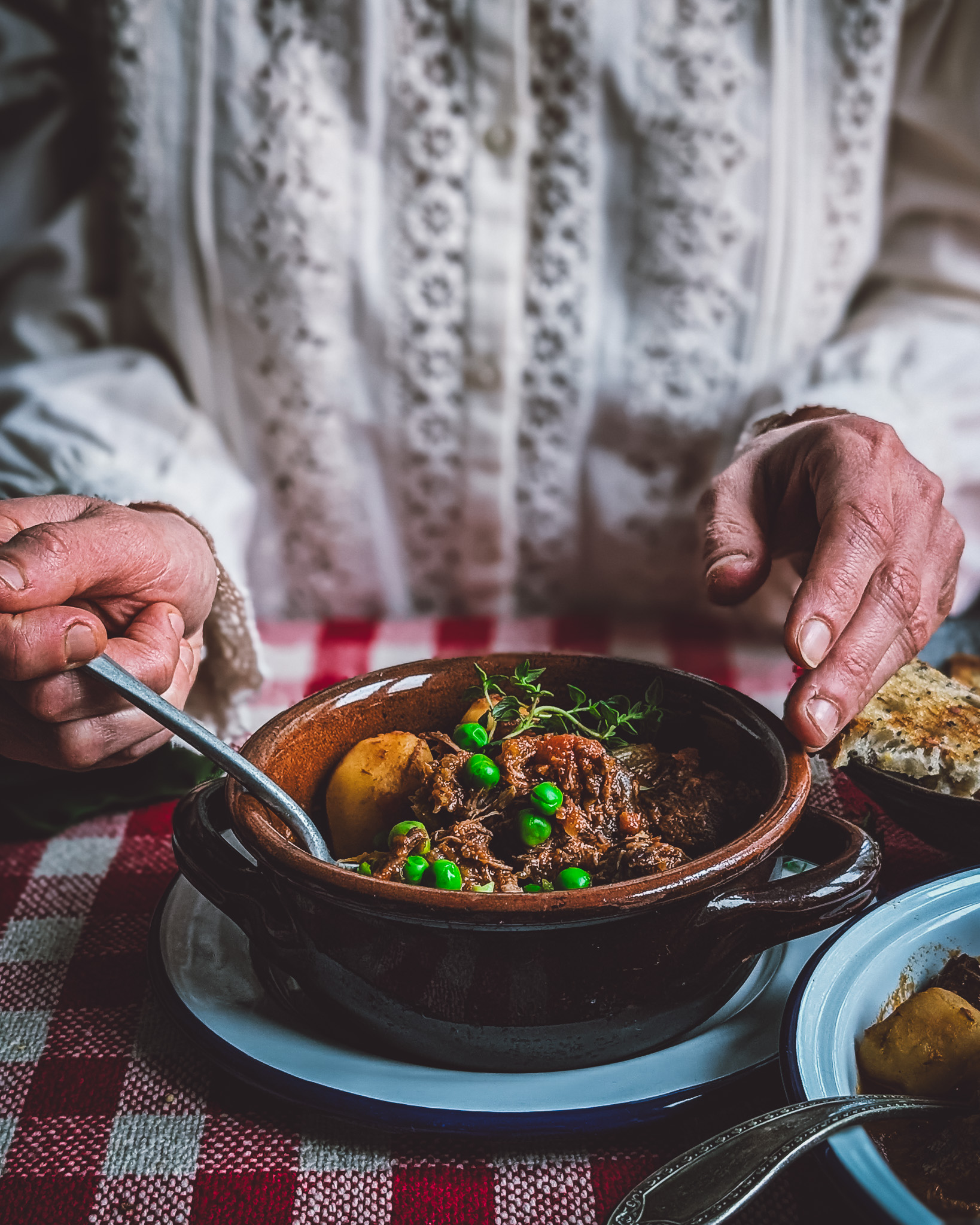
Our version keeps things simple: onion, celery and carrot. These are the vegetables my mum always used, and they're still the ones we reach for today. Some people add mushrooms, peas or other vegetables.
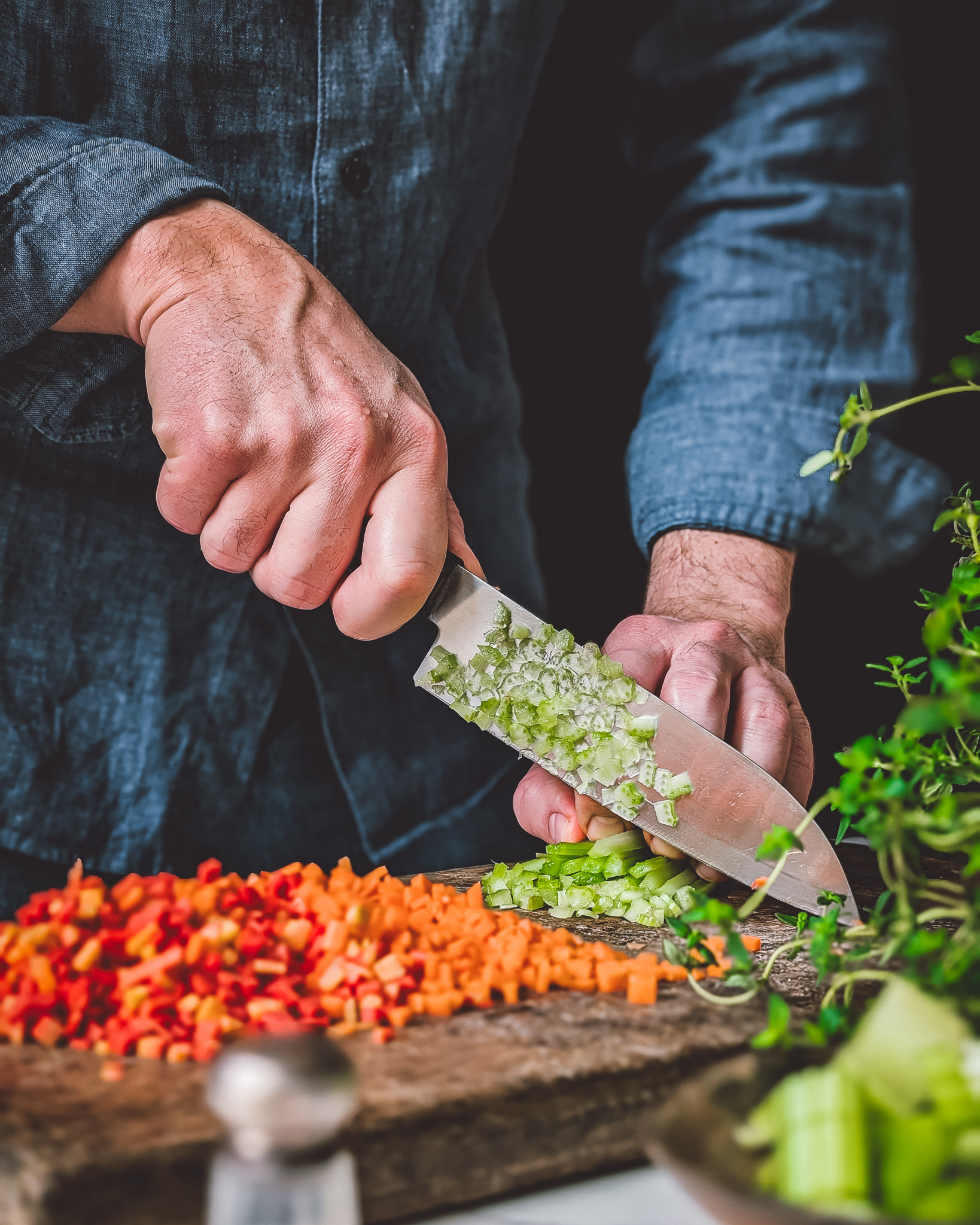
I chopped the vegetables for soffritto with a knife and kept part of them chunkier on purpose, to retain more texture at the end of the cooking.
Bread, polenta e scarpetta
We nearly always serve this stew with bread or polenta. And if there's sauce left at the bottom of the bowl, there's only one thing to do: la scarpetta. A piece of bread used to mop up every last bit. Not because you're still hungry, but because a sauce that's been slowly simmering for hours is too good to leave behind.
Making it the day ahead
Like many stews, this is often even better the following day. The flavours have more time to come together, making the sauce richer and deeper.
Ingredients
Serves 2-3 people (as a main)
- 500g beef chuck, diced to 1 1/2 inch cubes
- 2 tbsp sunflower oil
- 2 carrots, 1 finely chopped, 1 diced
- 1 onion, finely chopped
- 2 celery stalks, 1 finely chopped, 1 diced
- 1 bay leaf
- 1/2 chicken stock cube
- 250ml water
- 100ml red wine
- 1 tbsp tomato purée
- 100ml passata
- 500g potatoes, cut into chunks roughly the same size as the meat
- 1 tbsp sugar
- Salt and black pepper, to taste
Directions
1. Brown the meat
Heat 1 tablespoon of the oil in a heavy-based casserole or large saucepan over a medium-high heat. Brown the beef well on all sides, working in batches if needed.
Once browned, transfer the meat to a colander set over a bowl and let it drip all the excess serum.
2. Cook the vegetables
Turn down the heat to medium. Add the remaining tablespoon of oil to the pan.
Add the onion, carrot, celery and bay leaf. Cook gently, stirring regularly, until softened. You don’t want the vegetables to brown too much.
After about 5 minutes, stir in the tomato purée and cook for another minute or two to release its flavour.
3. Bring everything together
Pour in the red wine and let it bubble away for a few minutes until the alcohol has cooked off. Add the passata water and crumbled stock cube and return the beef to the pan.
Bring everything to a gentle simmer. Add the sugar and season lightly with salt and pepper. You should still keep on the bland side at this stage.
4. Cook low and slow
Cover the pan and lower the heat. Cook very gently for 1 hour and 15 minutes
The stew should barely be bubbling. If it’s boiling vigorously, reduce the heat further. Check and stir every now and then.
5. Add the potatoes
After time has passed, stir and add the potatoes.
Bring the stew back to a gentle simmer, cover again and continue cooking for about another hour.
Check the potatoes after around 45 minutes. Depending on the variety you’re using, they may need a little less or a little more time.
6. Finish the sauce
Once the meat and potatoes are tender, remove the lid. If the sauce is still a little thin, increase the heat and bubble to reduce for a few minutes.
Stir carefully so the potatoes keep their shape. Taste and adjust the seasoning if needed.
7. Rest and serve
Remove from the heat and leave to rest for 10 minutes before serving.
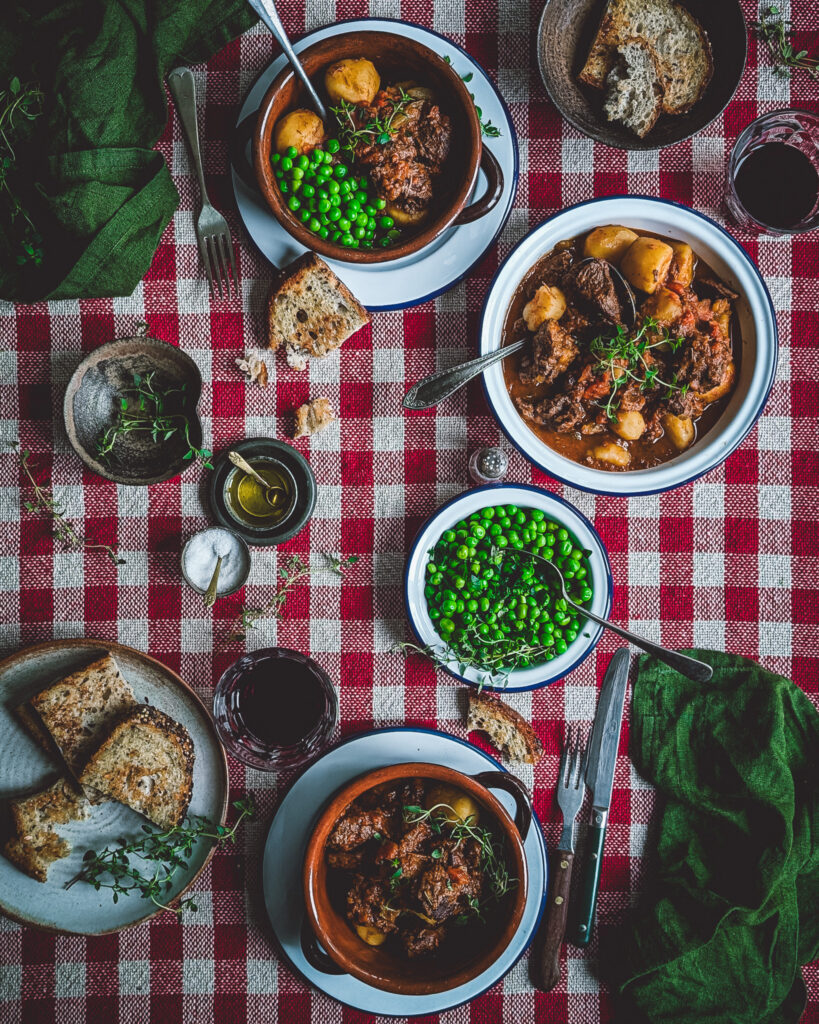
Serve with bread, polenta, or both. And don’t forget the scarpetta.
Share this recipe: